Key Takeaways
- Seoul has over 1,000 dermatology and aesthetic clinics — more per capita than almost any city on earth.
- 22% of foreign tourists visiting Seoul list skincare treatments as their #1 planned activity.
- Not all clinics are equal: the difference between a board-certified dermatologist and an unlicensed aesthetic spa can be enormous.
- Prices can be 40–70% cheaper than the US, UK, or Australia — but only if you book smart.
- Platforms like Gangnam Unni, Creatrip, and Modoodoc offer English booking with verified reviews.
- Always get a consultation before committing. A reputable clinic will never pressure you to book on the spot.
Why Seoul Is the World Capital of Skin Clinics
Seoul is not just a place where people happen to get facials. It is a fully developed medical-aesthetic ecosystem — part legitimate dermatology, part cutting-edge cosmetic innovation, part deeply embedded cultural obsession with skin health.
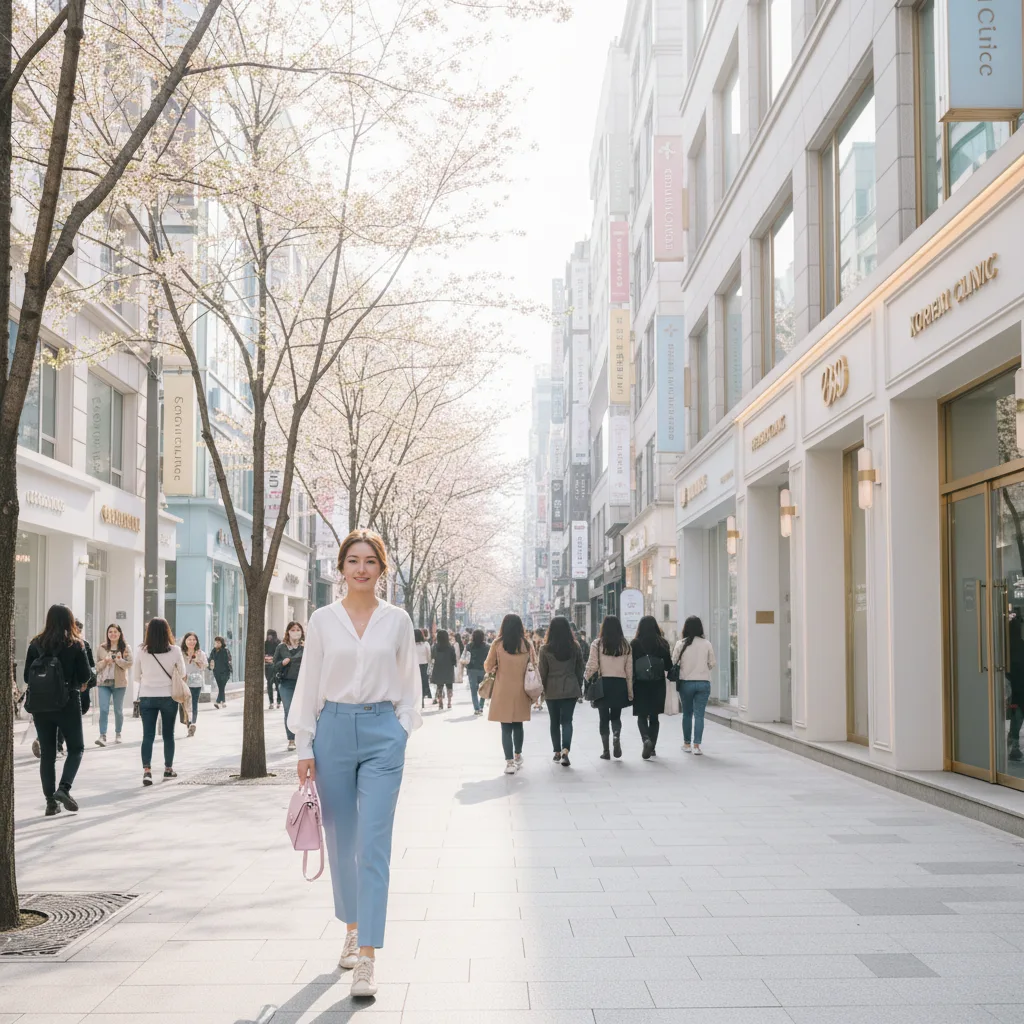
Here’s what makes Seoul uniquely positioned:
The density is staggering. The Gangnam district alone — roughly 4 square kilometers — is home to hundreds of clinics. According to Porteriu Magazine, Seoul’s Apgujeong-ro corridor has been called “the world’s most concentrated strip of advanced aesthetic medicine.”
The technology is genuinely ahead. Korean clinics often adopt devices and protocols 12–18 months before they appear in Western markets. HIFU, picosecond lasers, and skin booster injectables were mainstream in Seoul long before most American clinics offered them.
The pricing makes it accessible. A Ultherapy session costing $3,000–$5,000 in the US runs ₩500,000–₩1,200,000 (~$375–$900) in Seoul. Botox averages ₩3,000–₩5,000/unit (~$2.25–$3.75), compared to $12–$20 in the US.
The demand from foreigners is real. The Seoul Economic Daily reported that 22% of foreign tourists ranked dermatology visits as their primary activity — ahead of shopping and food tourism. Medical tourism grew over 30% year-on-year from 2022 to 2024.
But Seoul’s clinic scene is not uniformly excellent. This guide is your filter.
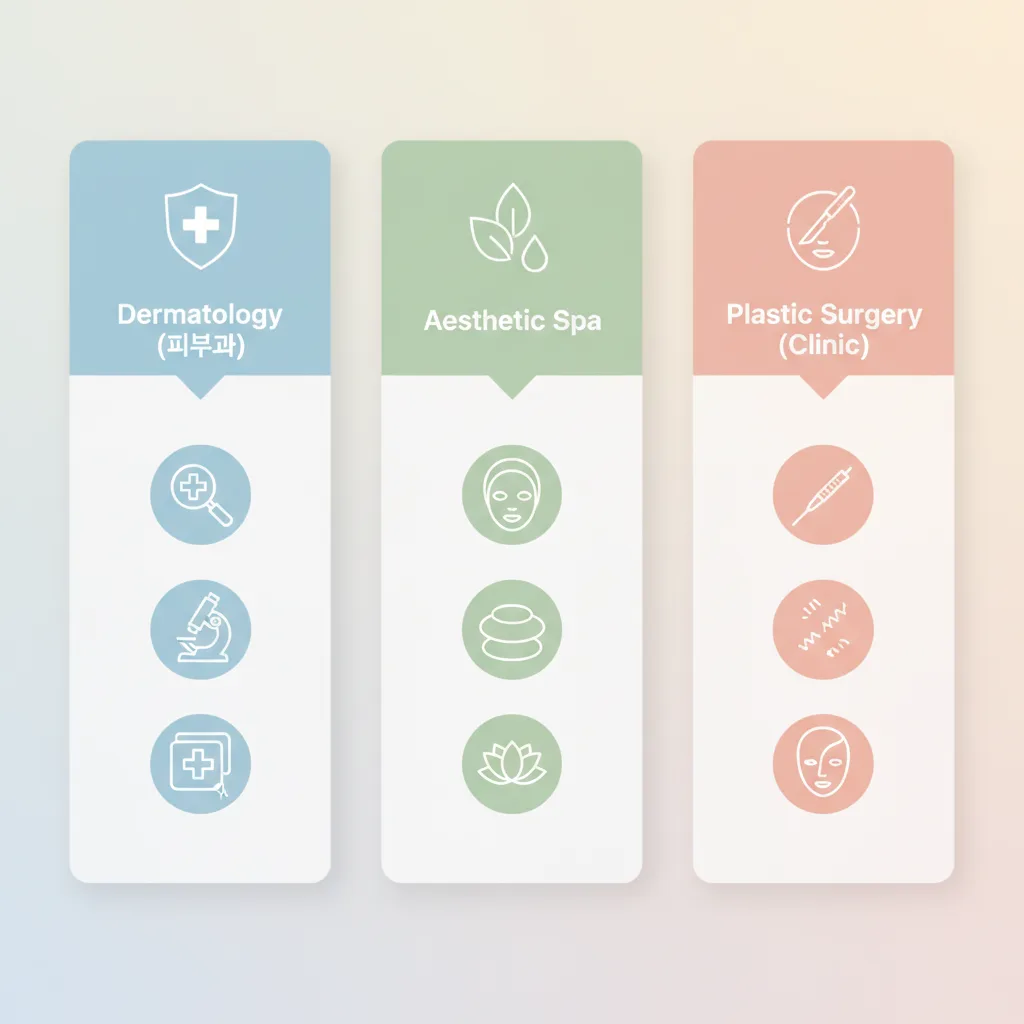
Understanding the Types of Korean Skin Clinics
피부과 (Pibu-gwa) — Dermatology Clinic
The gold standard. Staffed by a licensed dermatologist (피부과 전문의) who completed medical school, national boards, and a specialty residency. They can diagnose skin conditions, prescribe medication, perform medical-grade laser treatments and injectables, and provide official medical documentation.
에스테틱 (Aesthetic) / Skin Care Center
Non-medical beauty studios staffed by aestheticians. They offer facials, extractions, LED therapy, and mild peels. They cannot legally administer injectables or perform laser procedures above certain power thresholds.
성형외과 (Plastic Surgery Clinic)
Some also offer non-surgical cosmetic treatments — injectables, threads, body contouring. Legitimate medical settings, but for purely dermatological goals, a dedicated pibu-gwa is usually more appropriate.
Bottom line: When foreign visitors say “Korean skin clinic,” they usually mean a pibu-gwa offering cosmetic procedures. That’s what this guide covers.
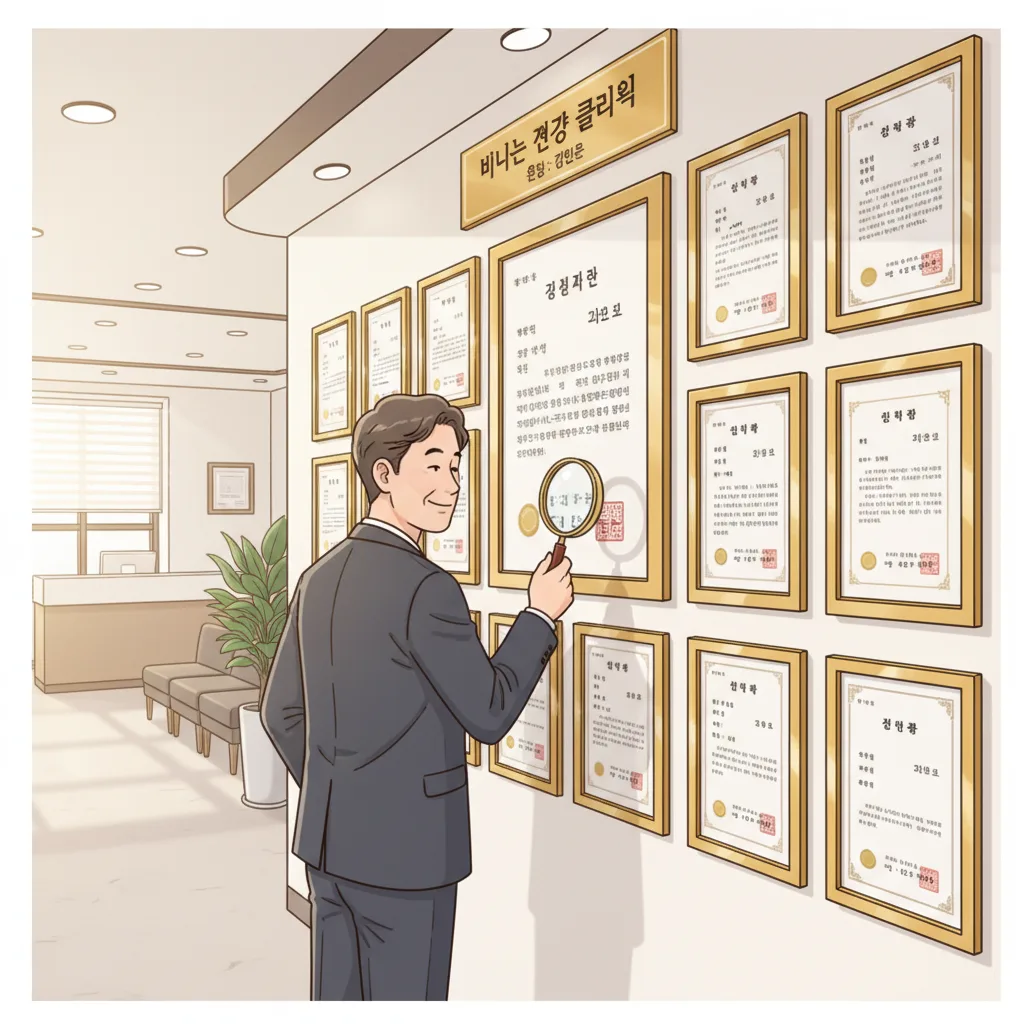
Decoding the Credential Wall — What Those Gold Frames Mean
Walk into any Korean clinic and you’ll see framed certificates. Here’s what they actually mean:
Pro tip: Verify a doctor’s credentials through Korea’s HIRA website at hira.or.kr — it has an English interface.
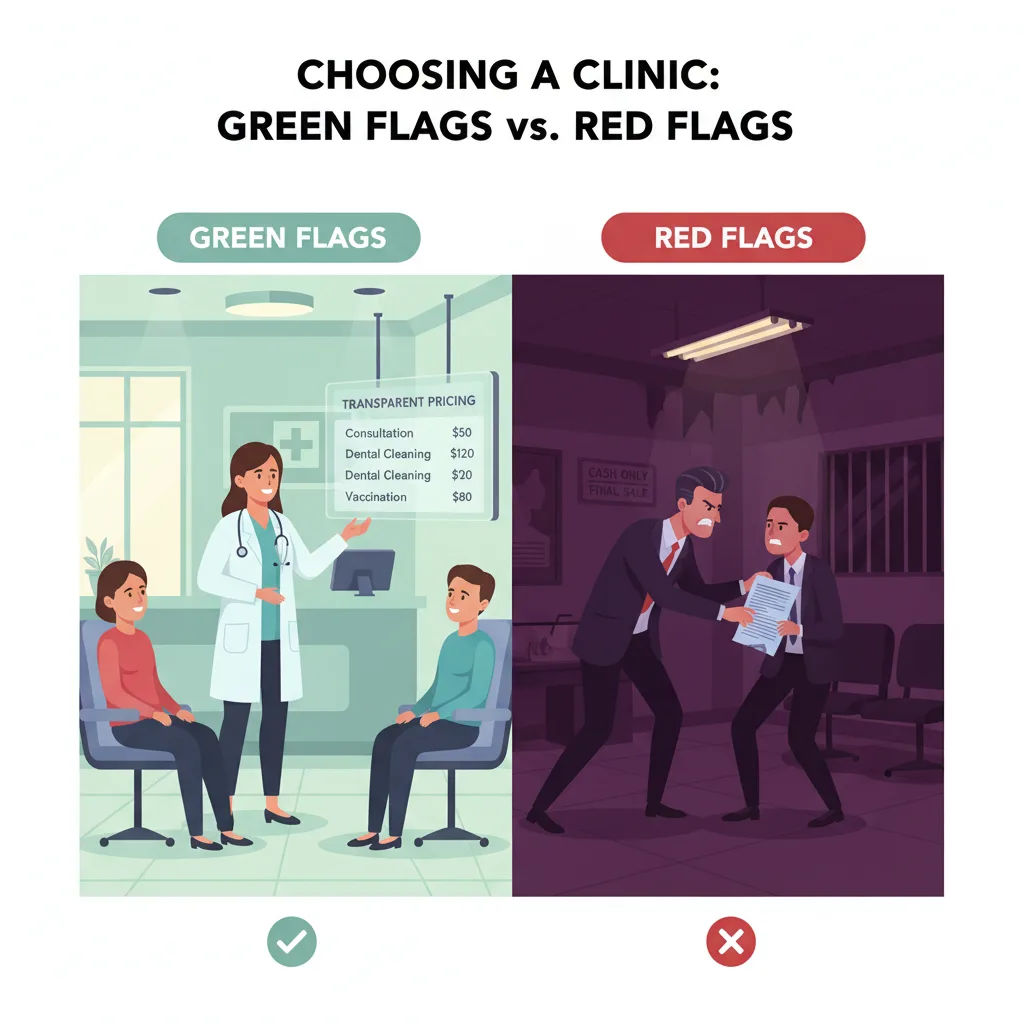
7 Green Flags That Signal a Trustworthy Clinic
✅ 1. Free or Low-Cost Consultation Before TreatmentA physician (not just a coordinator) examines your skin and discusses goals before any commitment.
✅ 2. A Doctor Who Personally Performs the TreatmentAsk directly: “Will the doctor perform my treatment?” For complex procedures, physician involvement matters.
✅ 3. Itemized, Transparent Pricing in WritingA written quote breaking down cost by treatment, machine model, and session count. No hidden fees.
✅ 4. English-Speaking Staff or Interpreter ServiceNot just convenience — it’s a safety issue. Top clinics offer online English consultation via Kakao before you arrive.
✅ 5. Verified Reviews on Multiple PlatformsConsistent positive reviews across at least two independent sources — Gangnam Unni, Google Maps, Naver, Creatrip.
✅ 6. No High-Pressure Sales TacticsThe moment a coordinator says “This price is only available today” — take that as a signal to leave.
✅ 7. MFDS-Approved EquipmentTop clinics display equipment brands (Ulthera, Thermage FLX, Picoway). Knockoff devices are a real risk in lower-tier clinics.
5 Red Flags to Avoid at All Costs
🚩 1. No Doctor On-Site During TreatmentIf the physician isn’t present during medical procedures — including injectables or medical-grade lasers — leave.
🚩 2. Prices That Seem Too Good to Be TrueBotox at ₩1,000/unit or Ultherapy for ₩100,000? That math doesn’t work. Likely counterfeit product or uncertified equipment.
🚩 3. No Patch Test for Laser TreatmentsEspecially on non-East-Asian skin tones. Skipping the patch test can lead to burns, hyperpigmentation, or scarring.
🚩 4. Unlisted or Unverifiable Doctor CredentialsIf you can’t find the treating physician in the HIRA registry, that’s a serious problem.
🚩 5. Aggressive Package Upselling Mid-TreatmentTrustworthy clinics present options before you begin — not while you’re lying on the table.
Price Guide: What to Expect in Seoul (2026)
Prices are approximate averages at mid-to-high-tier clinics in Gangnam/Apgujeong. Budget clinics may charge less; premium celebrity clinics may charge more.
How to Book — Platforms and Direct Booking Tips
Booking tips:
- Book 1–2 weeks in advance during peak season (March–May, September–November)
- Message the clinic on Kakao first — many offer pre-consultation via chat
- Ask if they accept foreign insurance or provide documentation for travel insurance claims
- Request an itemized quote in writing before confirming
Breaking the Language Barrier
- Papago (Naver’s translator app) — far more accurate for Korean than Google Translate
- Screenshots — take photos of treatment descriptions, consent forms, and receipts
- Kakao Translate — built into KakaoTalk, useful for real-time clinic communication
- Medical tourism coordinators — many clinics employ bilingual staff specifically for foreign patients
- Pre-visit vocab: 피부과 (dermatology), 레이저 (laser), 보톡스 (Botox), 상담 (consultation), 가격표 (price list)
Before & After Your Visit — Tourist Recovery Tips
- Schedule treatments early in your trip — allow 2–3 days for redness/swelling to subside before photos
- Avoid direct sun for 3–5 days post-treatment (Seoul convenience stores sell SPF50+ everywhere)
- No sauna/jjimjilbang for 48 hours after lasers or injectables
- Carry the clinic’s contact info — if you have concerns post-treatment, message them on Kakao
- Keep all receipts — useful for travel insurance and potential VAT refund at the airport
Q. Maintain Your Results at Home
K-beauty essentials to extend the benefits of professional treatments.