She walked into the clinic and asked for a skin booster, the way you might ask for a coffee, assuming there was just one thing called that. The consultant asked her which one, and she realized she had no idea there was more than one. Rejuran, Juvelook, exosome, and a few others were all on the menu, and they were not different brands of the same product. They did genuinely different things to the skin, and the right one depended on what was actually wrong with hers. She had assumed a skin booster was a single treatment; in fact it was a category, and choosing within it mattered. The consultation at Link Plastic Surgery often starts by clarifying that skin boosters are not one thing but several, each for a different purpose.
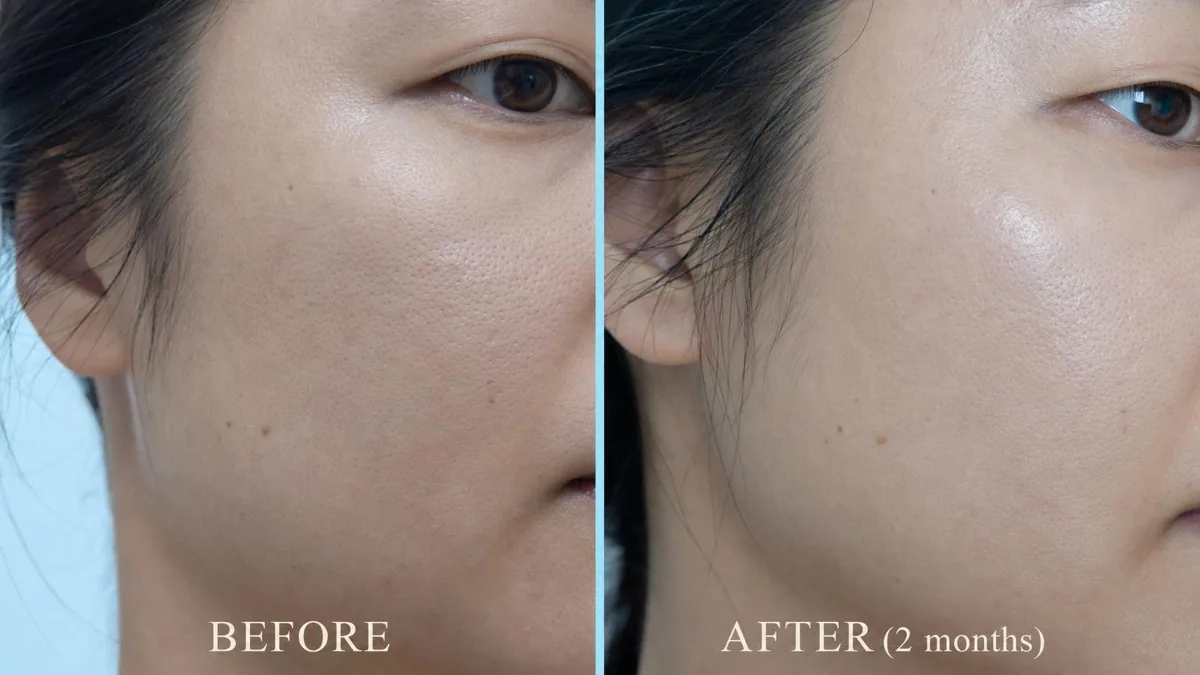
Skin boosters are one of the fastest-growing categories in Korean aesthetics, and also one of the most muddled in the minds of foreign patients. People talk about getting a skin booster as if it were a single treatment, when Rejuran, Juvelook, and exosome therapy work through completely different mechanisms and target different aspects of skin quality. Treating them as interchangeable leads to disappointment; understanding what each actually does is how you choose the one that fixes your particular concern.
Three Boosters, Three Different Jobs
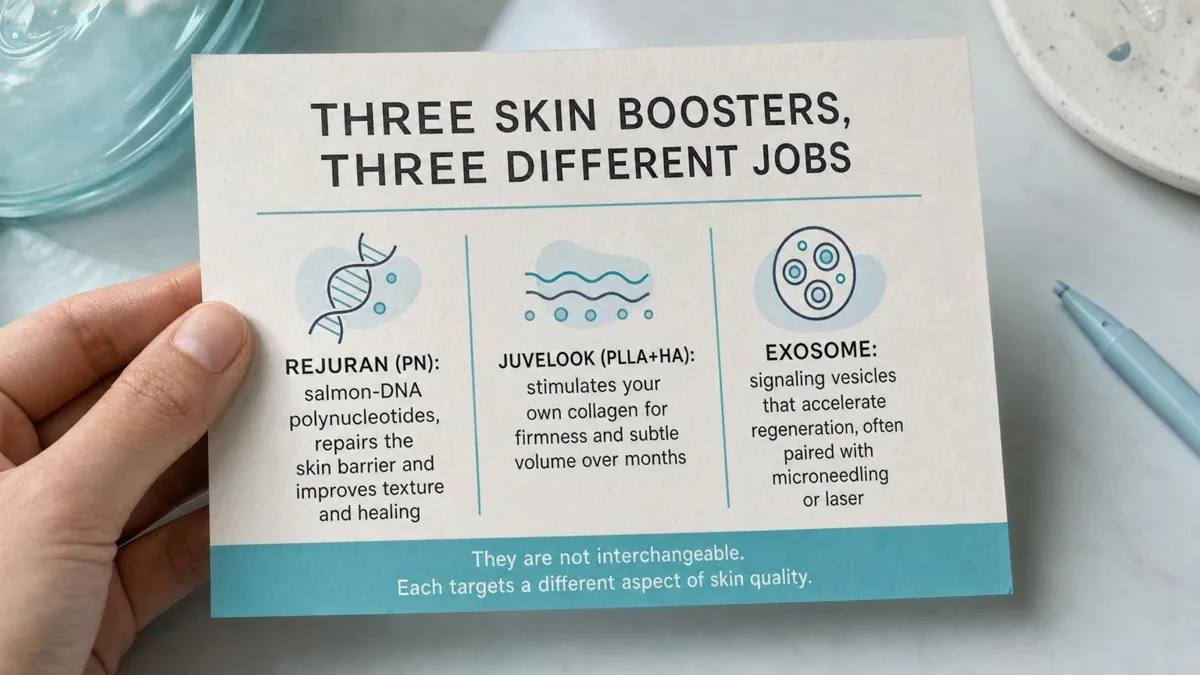
The three most common skin boosters in Korean clinics are not variations on a theme. Each is built around a different active principle and aims at a different outcome.
Rejuran is based on polynucleotides, derived from salmon DNA, and its job is to repair the skin barrier and improve texture and healing. It is the booster to reach for when skin is dull, rough, or its barrier is weak. Juvelook combines PLLA, a collagen-stimulating particle, with hyaluronic acid, and it works by prompting your own skin to build collagen over the following months, improving firmness and adding subtle volume. Exosome therapy uses signaling vesicles that accelerate cellular regeneration, and it is frequently paired with microneedling or laser to boost healing and glow. The detailed mechanisms are covered in our guides to Korean Rejuran, Korean Juvelook, and Korean exosome therapy. The point is that barrier repair, collagen building, and regeneration signaling are three different things.
What Each One Actually Does
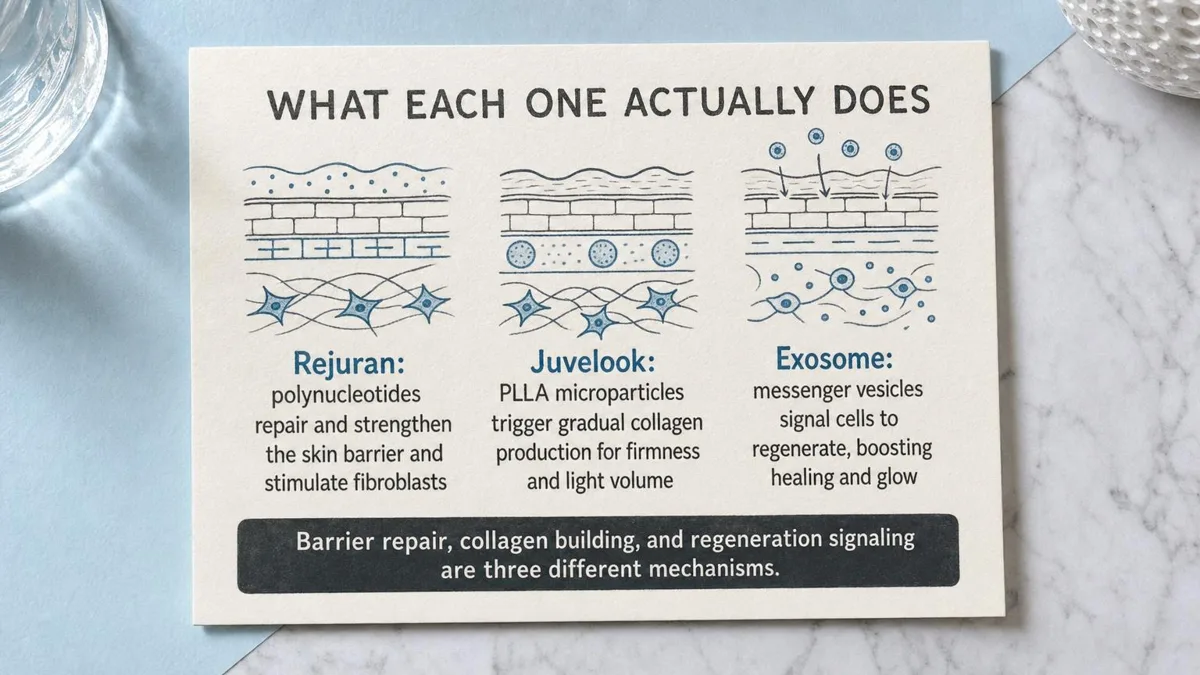
Because they work differently, they suit different skin concerns, and knowing the mechanism is how you match the booster to the problem.
Rejuran’s polynucleotides repair and strengthen the skin barrier and stimulate the fibroblasts that keep skin healthy, which is why it improves dull, rough, or compromised skin and helps it heal. It is about skin quality and resilience rather than volume. Juvelook’s PLLA microparticles trigger gradual collagen production, so its effect is firmness and a light structural improvement that builds over months; it is the one with a volume and firmness dimension rather than pure texture. Exosomes are messenger vesicles that signal cells to regenerate, which is why exosome therapy is so often combined with a procedure that creates micro-injury, like microneedling or fractional laser, accelerating the healing and the glow afterward. One repairs, one builds collagen, one signals regeneration. Confusing them, or expecting a barrier-repair treatment to add volume, is how patients end up feeling a booster did not work.
Which Booster for Which Concern
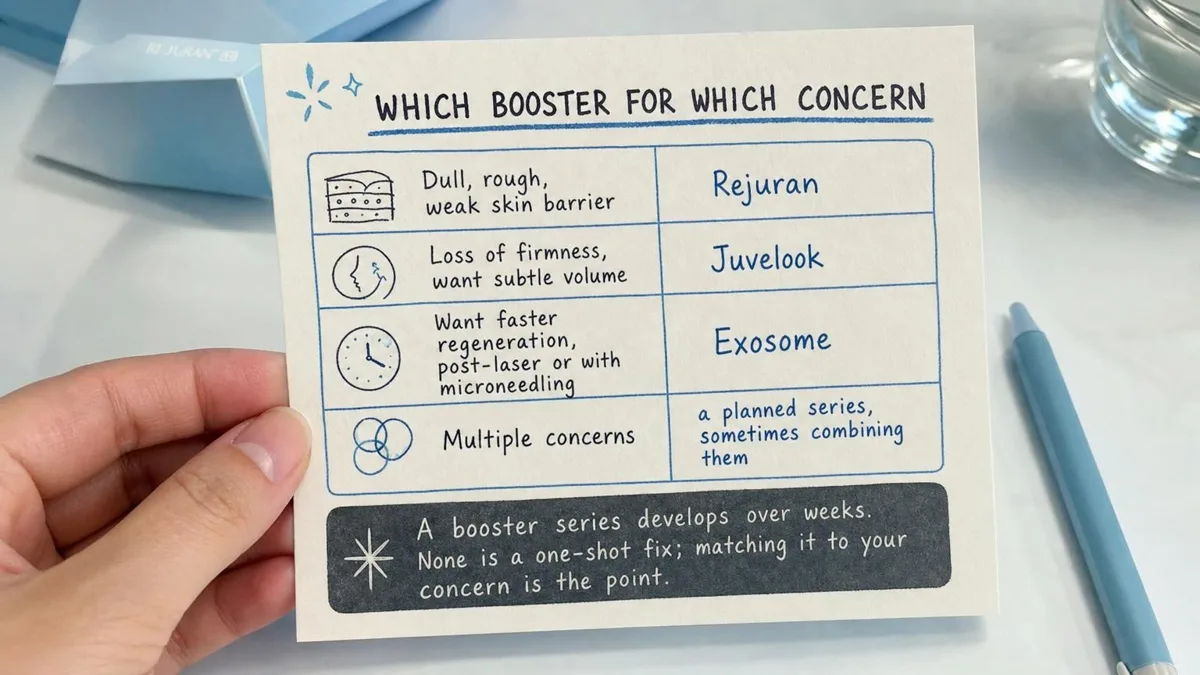
With the mechanisms clear, matching becomes straightforward. Dull, rough skin with a weak barrier points to Rejuran, which repairs and strengthens. Loss of firmness, or a wish for subtle volume alongside skin-quality improvement, points to Juvelook and its collagen stimulation. A desire for faster regeneration, especially after a laser or alongside microneedling, points to exosome therapy, which amplifies healing. And for someone with several concerns at once, the answer is often a planned series that may combine more than one booster, sequenced rather than done all together.
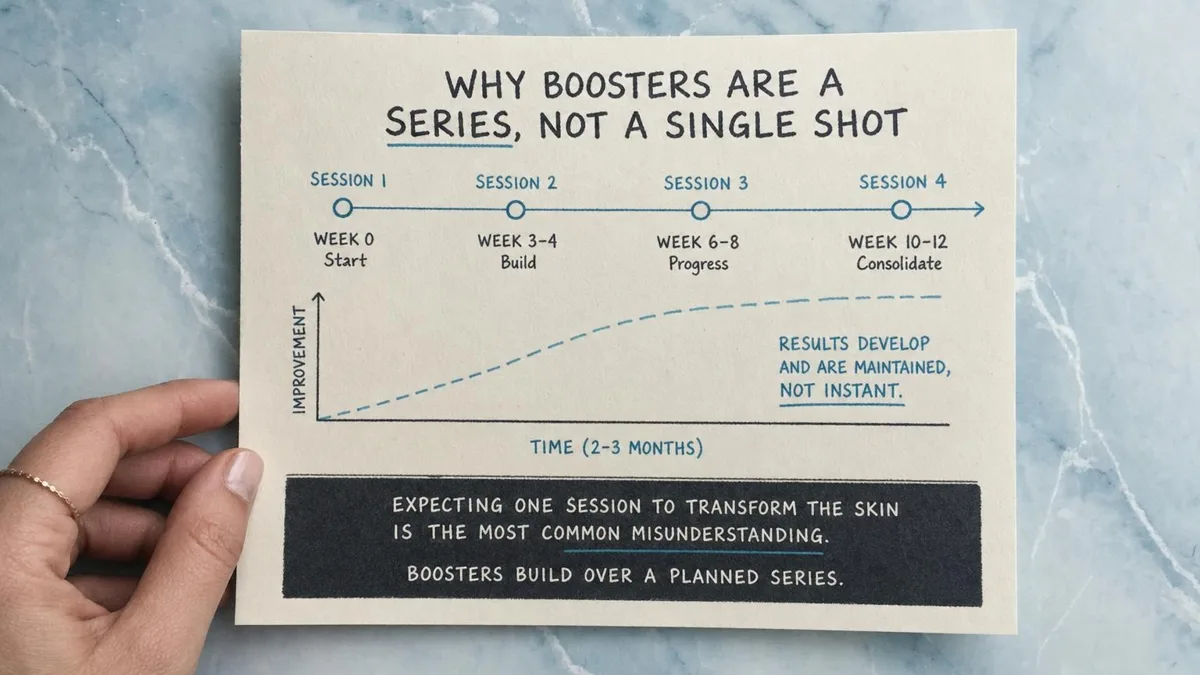
The most important thing to understand about all three is that they are a series, not a single shot. A booster’s effect develops over a course of sessions spaced a few weeks apart, building gradually over two to three months, and is then maintained rather than appearing instantly after one treatment. The most common misunderstanding is expecting one session to transform the skin, then concluding the booster failed when it did not. Matching the right booster to the concern and committing to the series is what produces the result. This series-based, quality-first philosophy runs through the broader range of Korean petit treatments.
Cost and How to Verify the Plan
Pricing is per session, and because all three work as a series, the realistic cost is the course, not a single treatment. The three differ somewhat in per-session price, but the more useful figure is the planned number of sessions and the maintenance interval afterward. These costs are generally below the equivalent abroad, which is part of why skin-booster courses are common on Seoul trips, though the multi-session structure means planning around your travel matters.
Before committing, five questions tell you whether a clinic is matching the booster to your skin or just selling a popular name. Which booster is recommended for your specific concern, and why that one rather than the others? Is your issue barrier and texture, firmness, or regeneration, and does the booster match it? How many sessions will the series realistically take, and over what timeline? If more than one booster is proposed, how are they sequenced? And what is the maintenance plan, given you live abroad? A clinic that explains the mechanism and matches it to your skin, rather than defaulting to whichever booster is trending, is the one to trust. For trip-planning details, visit Link Plastic Surgery’s official website.
Q. Are all skin boosters basically the same?
No. Rejuran repairs the skin barrier and improves texture, Juvelook stimulates collagen for firmness and subtle volume, and exosome therapy signals regeneration and is often paired with microneedling or laser. They work through different mechanisms and suit different concerns, so they are not interchangeable.
Q. Which skin booster is best for dull, rough skin?
Rejuran is the usual choice for dull, rough skin or a weak barrier, because its polynucleotides repair and strengthen the skin and improve texture and healing. It is focused on skin quality and resilience rather than volume or firmness.
Q. What is the difference between Rejuran and Juvelook?
Rejuran uses polynucleotides to repair the barrier and improve texture, while Juvelook uses PLLA plus hyaluronic acid to stimulate your own collagen for firmness and subtle volume over months. Rejuran is about skin quality; Juvelook adds a firmness and light-volume dimension. They address different things and are sometimes combined.
Q. What does exosome therapy actually do?
Exosomes are signaling vesicles that prompt cells to regenerate, accelerating healing and improving glow. Because of this, exosome therapy is frequently combined with treatments that create micro-injury, such as microneedling or fractional laser, to amplify the recovery and result. On its own it supports regeneration and skin quality.
Q. Can these boosters be combined?
Yes, and for multiple concerns a planned combination is common, for example Rejuran for the barrier and Juvelook for firmness, or exosome alongside a laser. The key is that they are sequenced thoughtfully rather than all done at once, so each can do its job.
Q. How many sessions do skin boosters need?
All three work as a series, typically several sessions spaced a few weeks apart, with the result building over two to three months and then maintained periodically. A single session does not deliver the full effect, which is the most common misunderstanding. The exact number depends on the booster and your concern.
Q. Why did my skin booster not work?
The two most common reasons are choosing a booster that did not match your concern, such as expecting a barrier-repair treatment to add volume, or judging the result after a single session when boosters need a full series. Matching the right booster to the concern and completing the course usually resolves both.
Q. Are skin boosters the same as filler?
No. Filler adds volume to a specific area and sits where placed. Skin boosters improve the quality of the skin itself, its texture, barrier, firmness, or regeneration, spread across an area rather than adding shaped volume. Juvelook does add a light volume dimension, but boosters as a category are about skin quality, not contouring.
Q. Which booster is best after a laser treatment?
Exosome therapy is the one most often paired with laser, because its regeneration signaling accelerates healing and enhances the post-laser glow. Rejuran is also used to support healing and barrier recovery. The choice depends on the laser and the goal, and is planned together with the laser treatment.
Q. How do I plan a skin-booster course as an international patient?
Choose the booster that matches your specific concern, and plan around the multi-session structure since the series develops over weeks and needs maintenance that is hard to complete in a single short trip. For scheduling and trip-planning details, visit Link Plastic Surgery’s official website.