Korean Skin Laser Treatments: Pico, HIFU, and Thermage Explained for First-Timers
Walk through any neighborhood in Gangnam and you will pass a dermatology clinic every other building. Skin laser treatments are as routine in Korea as dental cleanings. Office workers get Pico laser sessions during their lunch break. Patients in their late twenties start preventive HIFU treatments before visible aging begins. Thermage sessions are scheduled quarterly like oil changes.
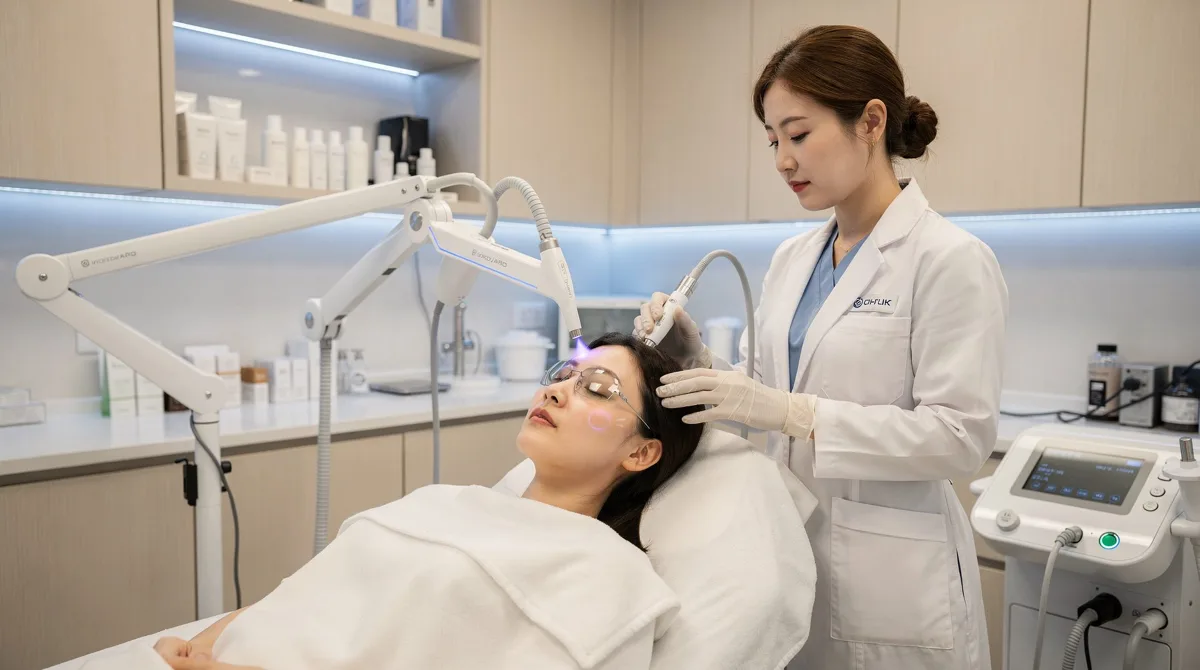
For first-time visitors, the sheer number of treatment options is overwhelming. Korean clinics list dozens of laser and energy-based devices on their menus, each with brand names that mean nothing to someone unfamiliar with the technology. The reality is simpler than it appears. Nearly every skin treatment at a Korean clinic falls into one of three categories: pigmentation lasers, ultrasound lifting devices, or radiofrequency tightening systems.
This guide breaks down the three main categories, explains what each one does, and provides the cost comparisons that matter if you are considering treatment in Korea.
Key Takeaways
- Pico laser targets pigmentation, acne scars, and uneven skin tone. Cost in Korea: $100 to $300 per session.
- HIFU (Ulthera/Ultraformer) lifts and tightens sagging skin using focused ultrasound. Cost in Korea: $300 to $800.
- Thermage/RF devices tighten skin and stimulate collagen through radiofrequency energy. Cost in Korea: $800 to $2,000.
- Korean clinics are 50 to 70% cheaper than US equivalents due to volume and competition.
- Most treatments require no downtime. You can return to normal activities immediately.
Category 1: Pico Laser
What It Does
Pico lasers deliver ultra-short pulses of energy (measured in picoseconds, or trillionths of a second) that shatter pigment particles in the skin. The body’s immune system then clears away the fragmented pigment over the following weeks. The technology is effective for sun spots, melasma, post-inflammatory hyperpigmentation, acne scars, and tattoo removal.
The most commonly used Pico laser devices in Korean clinics are the PicoSure, PicoWay, and Discovery Pico. Each has slightly different wavelength options, but for the average patient, the results are comparable.
Who It Is For
- Sun damage and age spots (the most common reason international patients seek Pico laser in Korea)
- Melasma (requires a careful protocol with low energy settings over multiple sessions)
- Acne scars and enlarged pores (Pico toning stimulates collagen remodeling)
- Post-inflammatory hyperpigmentation from acne or skin injuries
- Tattoo removal (Pico lasers are the current gold standard for this)
What a Session Feels Like
Pain level: 3 out of 10. Most patients describe it as a warm snapping sensation against the skin. Numbing cream is applied 20 minutes before the procedure. A full-face Pico toning session takes 15 to 20 minutes. There is no downtime. The skin may appear slightly pink for a few hours, but makeup can be applied the same day.
Sessions Needed
For general brightening and tone correction: 3 to 5 sessions, spaced 2 to 4 weeks apart. For melasma: 6 to 10 sessions with careful monitoring. For tattoo removal: 5 to 15 sessions depending on ink colors and depth.
Category 2: HIFU (High-Intensity Focused Ultrasound)
What It Does
HIFU devices deliver focused ultrasound energy to specific depths beneath the skin surface. The energy creates thermal coagulation points in the SMAS layer (the same tissue layer that surgeons tighten during a facelift) and in the deep dermis. This controlled damage triggers a wound-healing response that produces new collagen and tightens the tissue over 2 to 3 months.
The two dominant HIFU devices in Korea are Ulthera (the original, FDA-cleared device from the US) and Ultraformer III/MPT (a Korean-manufactured alternative that has become equally popular due to lower cost and comparable results for most patients).
Who It Is For
- Early to moderate skin laxity along the jawline and lower face
- Sagging cheeks and nasolabial folds
- Neck skin looseness and banding
- Brow drooping (HIFU can provide a subtle brow lift effect)
- Patients who want a lifting effect without surgery or injectable fillers
What a Session Feels Like
Pain level: 5 to 7 out of 10. HIFU is the most uncomfortable of the three categories. The ultrasound energy targeting deep tissue creates a sharp, aching sensation, particularly along the jawline and around the mouth. Korean clinics manage this with a combination of numbing cream, oral pain medication, and sometimes local anesthetic injections along the jaw. A full-face session takes 30 to 60 minutes depending on the number of lines (shots) delivered.
Sessions Needed
One session provides results that develop over 2 to 3 months and last 12 to 18 months. Most Korean dermatologists recommend one session per year for maintenance. Some patients alternate between Ulthera (for deeper lifting) and Ultraformer (for surface-level tightening) on a 6-month rotation.
Category 3: Radiofrequency (Thermage / Volnewmer)
What It Does
Radiofrequency (RF) devices deliver electromagnetic energy that heats the dermis uniformly. Unlike HIFU, which creates focused points of intense heat at specific depths, RF distributes heat across a broader area. This volumetric heating stimulates collagen contraction (immediate tightening) and new collagen production (gradual improvement over months).
The two main RF devices in Korean clinics are Thermage FLX (the industry standard from Solta Medical) and Volnewmer (a newer monopolar RF device that has gained popularity in Korea for its combination of tightening and skin texture improvement).
Who It Is For
- Overall skin tightening and firmness improvement across the face
- Fine lines and crepey skin texture
- Jawline and cheek contouring through skin contraction
- Body skin tightening (arms, abdomen, thighs)
- Patients who want a subtler, more gradual result than HIFU
What a Session Feels Like
Pain level: 4 to 6 out of 10. Thermage FLX uses a vibrating handpiece and cooling system that significantly reduces discomfort compared to older versions. Patients feel a deep warming sensation that alternates with cooling pulses. Volnewmer is generally rated as slightly less painful. A full-face Thermage session takes 30 to 45 minutes.
Sessions Needed
One session provides results that last 12 to 24 months. Collagen production peaks at 2 to 3 months after treatment. Most patients schedule one session per year. Thermage and HIFU are frequently alternated on a 6-month cycle for maximum collagen stimulation.
Side-by-Side Comparison
Why Korean Clinics Are Cheaper
The price difference is not about quality. Korean dermatology clinics operate on a high-volume model. A busy clinic in Gangnam may perform 30 to 50 laser sessions per day. This volume allows them to amortize device costs faster, negotiate better supply pricing, and operate with lower per-treatment overhead.
Competition also plays a role. There are over 1,500 dermatology clinics in Gangnam alone. Price transparency is high because comparison sites and patient review platforms publish real pricing data. Clinics cannot inflate prices without losing patients to competitors on the same street.
At clinics like Link Plastic Surgery, skin treatments including Rejuran, Ulthera, and various laser protocols are offered alongside surgical procedures. This integrated approach means patients can combine a surgical consultation with a skin treatment plan during the same visit, which is particularly efficient for medical tourism patients with limited time in Seoul.
Skin Laser Treatment Cost: Korea vs. United States
Package deals are common at Korean clinics. A bundle of 5 Pico sessions or a combination of HIFU + Pico often comes at a 20 to 30% discount compared to individual session pricing.
Which Treatment Should You Start With
For first-time visitors to Korea who want a skin treatment during their trip, the choice depends on the primary concern:
- Sun spots, uneven tone, acne marks: Start with Pico laser. You can do 2 sessions during a 2-week trip (spaced 10 days apart) and continue the series at home or on a return visit.
- Sagging jawline, drooping cheeks, loose neck: One HIFU session will produce results over the following 2 to 3 months. You will see the improvement after returning home.
- Overall firmness, fine lines, skin texture: Thermage provides broad skin quality improvement. One session before heading home gives you progressive results over months.
- Multiple concerns: Korean clinics commonly perform combination treatments in a single visit. Pico + HIFU or Pico + Thermage in the same session is routine.
Want a Personalized Skin Treatment Plan in Korea?
Get a free remote consultation with the skin treatment team at Link Plastic Surgery. Send your photos through WhatsApp or KakaoTalk for a customized recommendation and cost estimate.
Contact Link Plastic Surgery
Related Articles
Botox in Korea: Jaw Slimming, Forehead Lines, and Calf Reduction at Korean Clinic Prices
Lip Filler in Korea: Why Korean Injectors Get Different Results
Upper Eyelid Fat Removal in Korea: 3 Real Patient Results Without Incisional Surgery
Planning Plastic Surgery in Korea: The Complete Medical Tourism Guide
Content is for informational purposes only and does not constitute medical advice. Consult a qualified medical professional before undergoing any treatment. Results may vary.
Related Korean Beauty Guides
- Korean Ultherapy in Seoul: How Foreign Patients Verify Real Merz MFU-V Before the Discount Tempts Them
- Korean Shrink Universe vs Ultherapy: Which HIFU Lifting Device Foreign Patients Actually Need
- Korean Fraxel Dual: How Foreign Patients Verify Real Solta 1550nm + 1927nm Before the Discount Tempts Them
- Korean Mole and Spot Removal: Why Seoul Diagnoses Before It Zaps