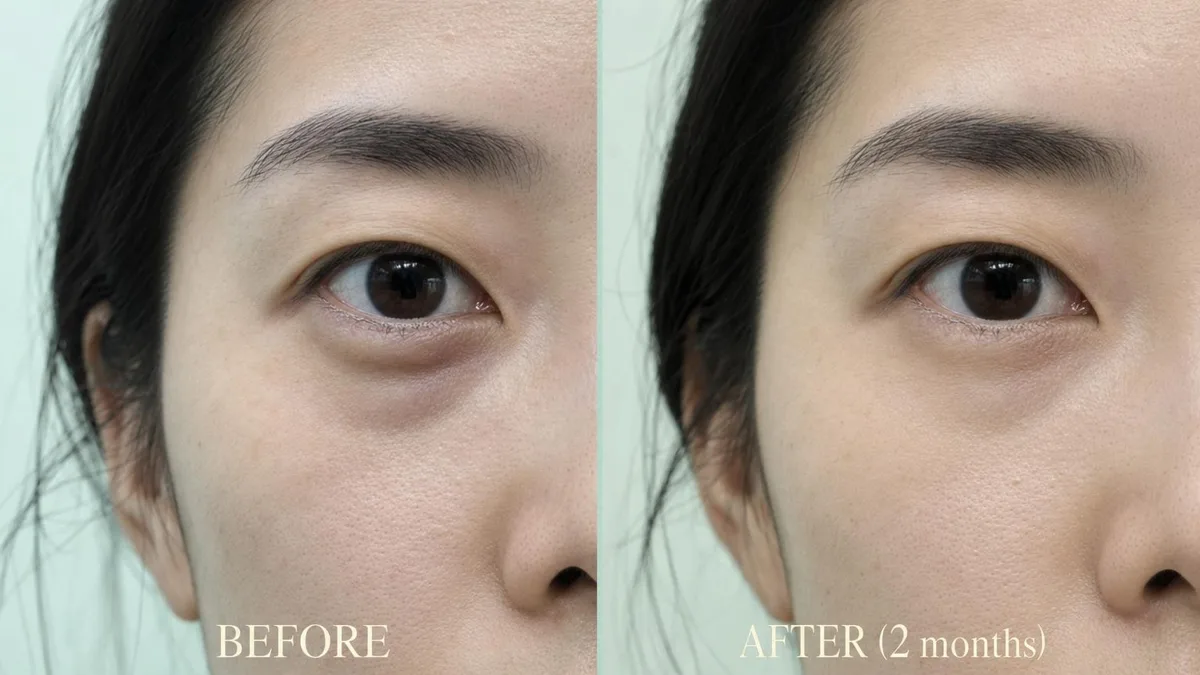
If you have spent years buying brightening eye creams, color-correcting concealers, and the occasional course of laser, and the darkness under your eyes still looks the same, the problem is probably not the products. It is that nobody told you what is actually causing the darkness in the first place. At Link Plastic Surgery in Gangnam, Seoul, an under-eye consultation usually starts with one question that most people never think to ask: what is the darkness made of? Get that answer wrong, and every cream, serum, and laser session is aimed at the wrong target.
The mistake almost everyone makes with dark circles
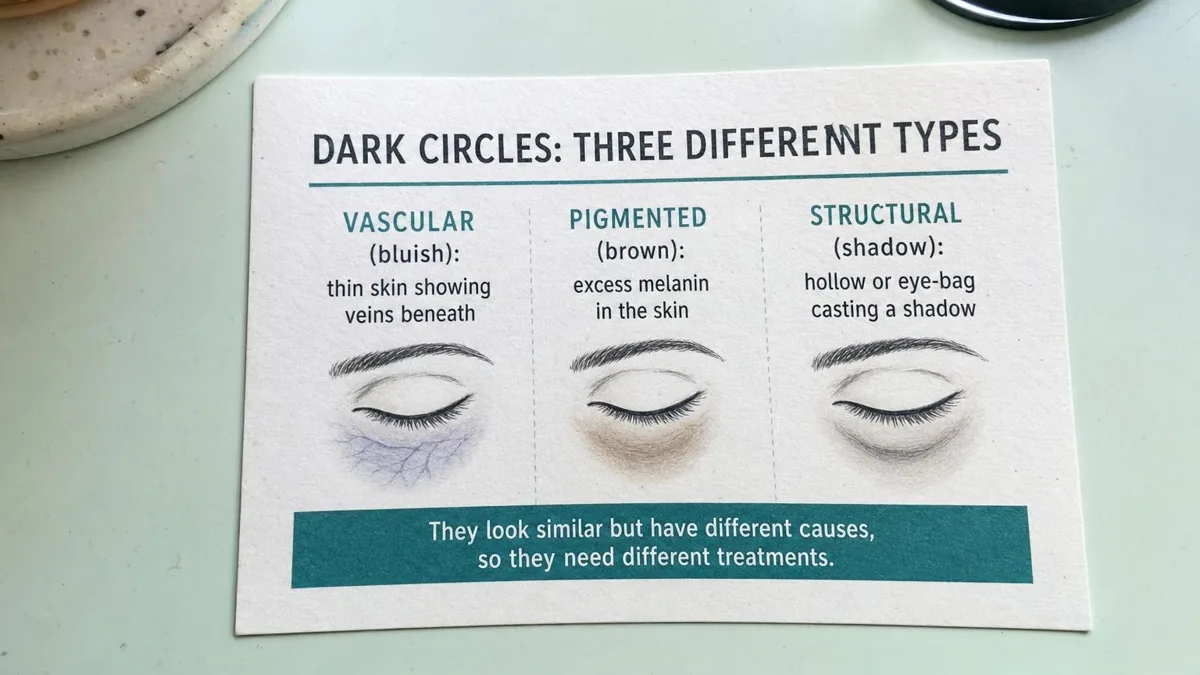
Most people treat dark circles as a single thing with a single fix. They see darkness, they reach for whatever promises to brighten, and when it fails they conclude their eyes are simply hopeless. The real issue is that under-eye darkness is not one condition. The darkness can come from thin skin, from pigment in the skin, or from a shadow cast by the shape of the area. A brightening cream can only act on pigment in the surface of the skin. If your darkness is coming from anywhere else, the cream was never going to work, no matter how expensive it was or how long you used it.

A simple way to read your own under-eyes
You can get a rough read on your own under-eyes at home before any consultation, using nothing but your hand and a light. These checks do not replace a proper assessment, but they tell you where to look.
- Gently stretch the skin sideways under one eye. If the darkness lightens or disappears while stretched, thin skin showing the vessels beneath is a major factor.
- Look at the area in two or three different lights. If it stays the same even brown tone no matter the angle, pigment in the skin is the likely driver.
- Tilt your chin up toward a light, or shine a light from below. If the darkness mostly vanishes when the angle changes, you are looking at a shadow from the shape of the area, not a color at all.
Most people find more than one of these is true, which is exactly why self-treatment so often misses. The job of a good consultation is deciding which factor is leading, because that decides what to do first.

What a consultation actually changes
When a surgeon stretches the skin, tilts the head, and checks the area under proper light, they are not performing a ritual. They are separating color from shadow. A shadow from a hollow under the eye will never respond to a cream or a pigment laser, because there is no extra color to remove. Skin that is simply thin needs to be made healthier and a little thicker, not bleached. Pigment that sits in the skin does respond to the right laser, but as a planned series over time, not a single session. Knowing which one you are dealing with is the difference between a plan that works and another year of spending with nothing to show for it.
Where each cause is usually addressed
Once the leading cause is clear, the sensible options narrow quickly. Thin, vascular under-eyes are generally approached by improving skin quality and thickness, which is where gentle skin-quality boosters such as Korean Rejuran-type treatments and other non-surgical petit options come in. Surface pigment is approached with appropriate pigment laser and topical care, run patiently as a series rather than rushed. A structural shadow from a hollow or a small under-eye bag is the one type that no cream or laser can reach, because the problem is shape rather than color, and it is usually addressed by repositioning or, in some cases, reducing the under-eye fat so the shadow is removed at its source. The point is not that one treatment is best. It is that the right treatment depends entirely on what is causing your particular darkness.

A specific word of caution about under-eye filler
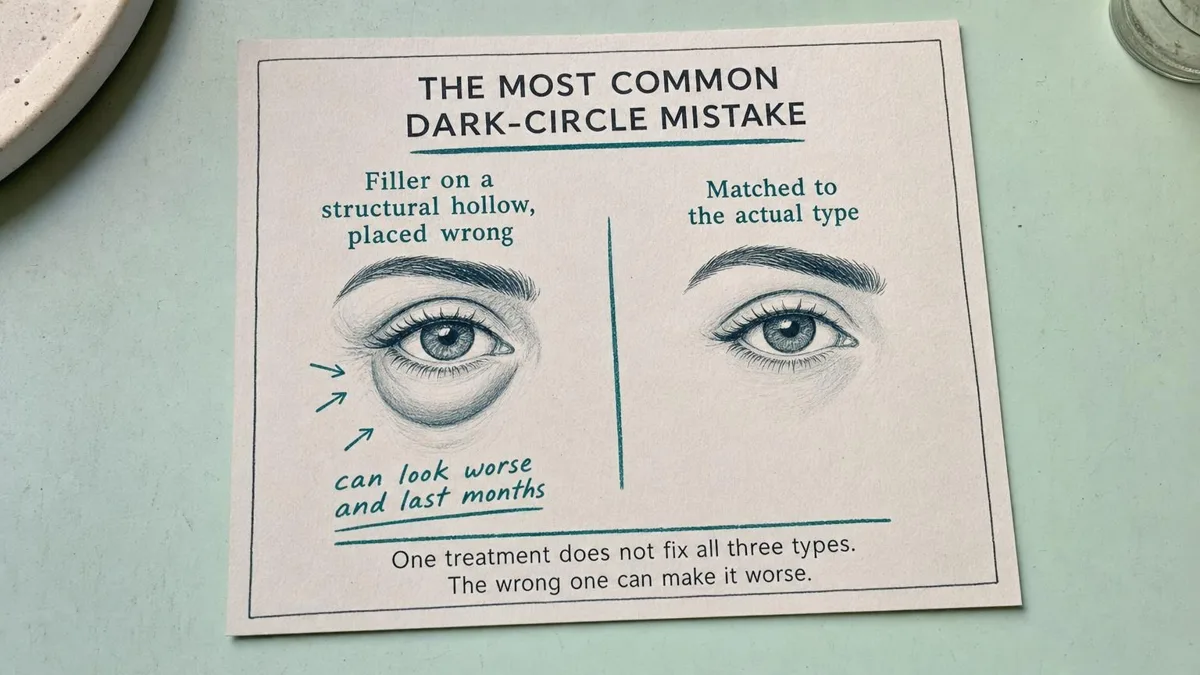
Under-eye filler gets used as a catch-all for dark circles, and it is the place people most often go wrong. On the right under-eye, conservatively placed, it can help by softening a hollow. On the wrong under-eye, or overfilled, it can puff, shift, or cast a fresh shadow of its own, and because of how the under-eye holds filler, a poor result can linger for a long time. If a clinic reaches for filler before they have worked out what is actually causing your darkness, that is a reason to slow down and ask questions.
Q. Can a cream ever fix dark circles?
A cream can help only when the darkness comes from surface pigment, and even then it works slowly and partially. If your darkness is from thin skin or from a shadow caused by the shape of the area, a cream cannot reach the cause. That is why so many people feel their eye creams never did anything.
Q. How do I know if my dark circles are a shadow rather than a color?
Tilt your chin up toward a light or shine a light from below your eyes. If the darkness mostly disappears when the light angle changes, you are seeing a shadow from the shape of the area, not pigment. A shadow needs the structure addressed, not a brightening product.
Q. Is under-eye filler a safe choice for dark circles?
It depends entirely on the cause. For a hollow, conservative filler can help. On thin or pigmented under-eyes, or when overfilled, it can worsen the look and a poor result can persist. It should only be considered after a proper assessment of what is driving your darkness, never as a default first step.
Q. What anesthesia is involved if I need an under-eye procedure?
Non-surgical petit treatments use topical numbing only. For under-eye fat repositioning, the procedure is performed under local anesthesia with light sedation, not general anesthesia. Your surgeon will explain the specifics for your case during consultation.