
Facial Fat Grafting
Restore lost volume — with volume that is already yours.
Restore lost volume — with volume that is already yours.
Purified fat from your thighs or abdomen is transferred into areas of the face that have lost volume. Because it's your own tissue, rejection is virtually impossible, and once the cells establish blood supply the result is long-lasting.
At Link PS, our surgeons place tiny droplets of fat in multiple layers for maximum survival and a natural contour.
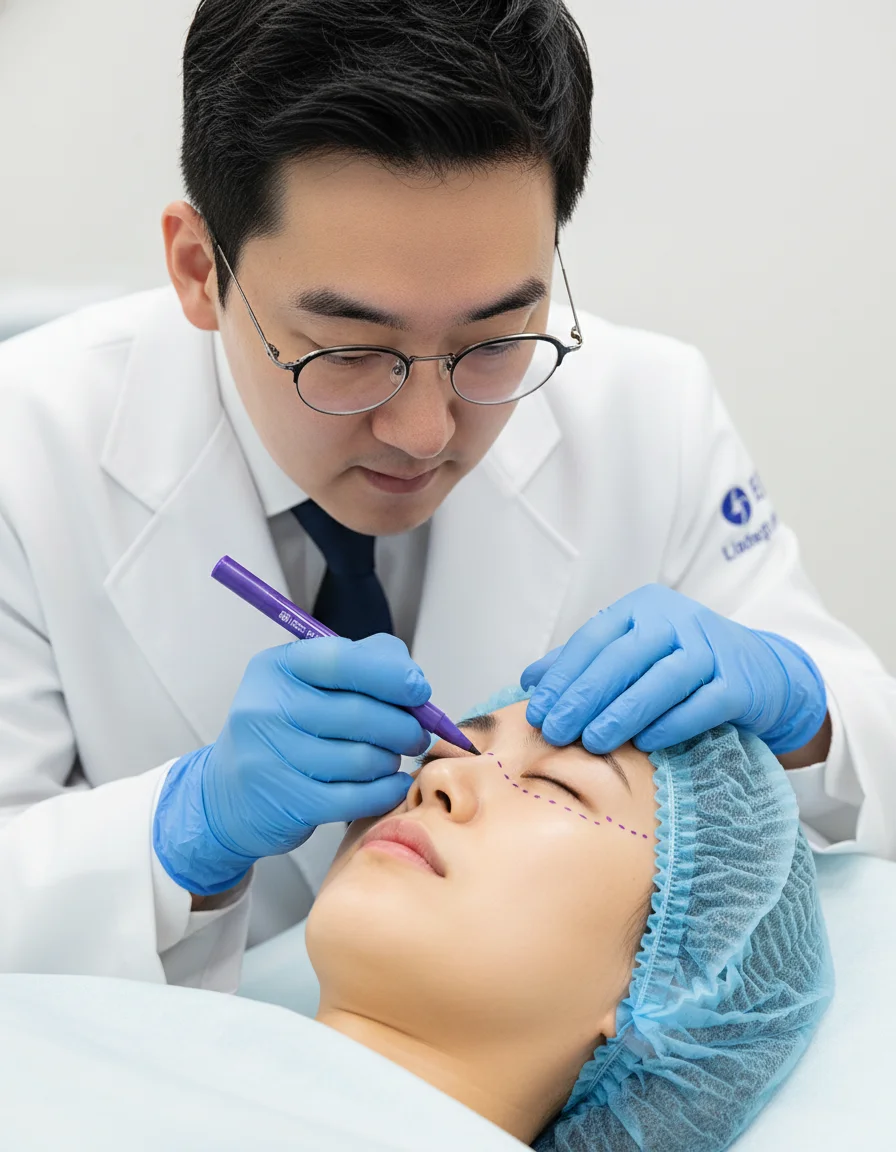
Approximately 40 minutes, depending on the number of areas treated and the volume of fat transferred.
Sedation anesthesia. No hospitalization — patients return home or to their accommodation the same day.
Fat harvested in a single session can typically be used for up to two grafts. Because harvested fat remains viable for only three months, the second top-up must be completed within that window.
Initial swelling subsides in 2–3 weeks. Final contour settles at 3–6 months. Surviving fat is long-lasting.
Restore a smooth, softly rounded contour when the forehead becomes flat or depressed with age.
Fill hollowed temples to restore a youthful upper-face framework and reduce a drawn appearance.
Replace the soft volume loss of the midface for a refreshed, lifted look without pulling or tension.
Smooth the transition between lower lid and cheek to soften dark circles and tear-trough hollows.
Soften deepened creases between the nose and mouth by restoring volume where the cheek has descended.
Injecting a large volume is not the answer. What matters is how much of that fat survives — and how evenly it settles. Our protocol is optimized for graft survival, not for "filling more."
A small volume of fat is gently extracted from a donor area such as the thighs or abdomen, using a fine cannula under sedation.
The harvested fat is purified — separating viable fat cells from blood, oil, and fluid — to maximize the portion that will survive after transfer.
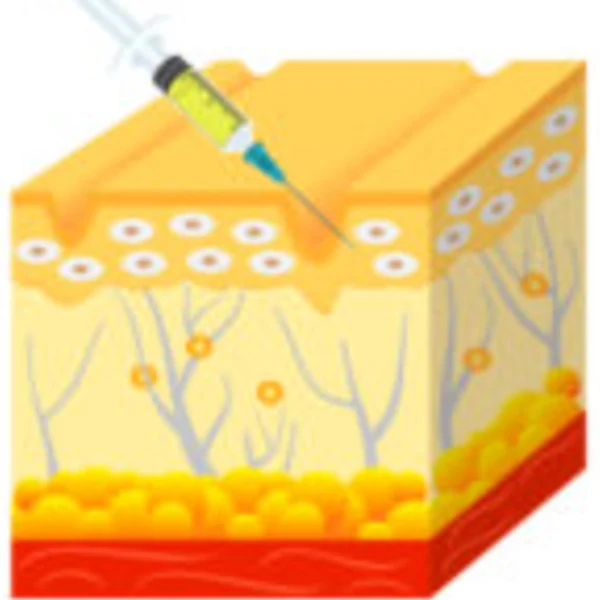
Based on the consultation design, purified fat is injected in small, layered amounts across the targeted zones, placed at varying depths for an even, natural contour.
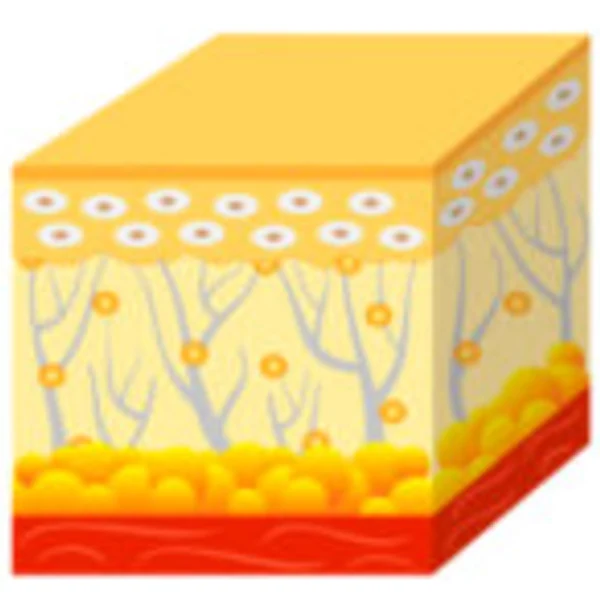
Some initial reabsorption is normal over the first weeks. The surviving fat integrates with surrounding tissue and the final contour appears over 3–6 months.
Those whose upper face appears flat or hollow, making the face look angular or older than it is.
Patients who notice the creases from the nose to the mouth becoming more pronounced with age.
Those whose face looks tired or aged overall due to a thinning, sunken midface — rather than one isolated area.
Patients who want long-lasting volume without the ongoing cycle of filler maintenance or any foreign implant.
Dermal fillers are synthetic substances (most commonly hyaluronic acid) that are gradually absorbed over 6–18 months and require repeat treatment. Fat grafting uses your own tissue. Once the transferred fat cells establish blood supply in their new location, they remain as a long-lasting part of your face, aging naturally with the rest of your tissue.
Good candidates are healthy adults with generalized facial volume loss, realistic expectations, and stable weight. Active heavy smokers, patients with uncontrolled medical conditions, or those planning significant weight changes are typically advised to defer the procedure until conditions are optimized. Final suitability is confirmed in consultation.
The most common donor sites are the thighs and lower abdomen, though flanks or other areas may be used depending on your body proportions. The volume required for facial grafting is small, so the donor area does not show a visible change in shape.
Survival rates vary by patient, technique, and treatment area, commonly within a 40–70% range once the cells establish blood supply. Surgeons typically slightly overcorrect at the time of transfer to account for expected early reabsorption. Final retained volume settles over 3–6 months.
A second session allows the surgeon to fine-tune volume after the initial graft has settled. Whether stored fat from the first session can be used for the second depends on clinic protocol; your surgeon will explain what is offered during consultation.
Most visible swelling resolves within 2–4 weeks. The final contour becomes clear between 3 and 6 months, once residual swelling resolves and surviving fat has fully integrated with surrounding tissue.
Grafted fat behaves like the fat at its donor site. Significant weight gain or loss can proportionally change facial volume. Maintaining a stable weight is the most reliable way to preserve the result.
Smoking significantly impairs fat cell survival; we strongly recommend stopping at least 2 weeks before and 4–6 weeks after the procedure. Alcohol should be avoided for about a week before and after to minimize swelling and bruising. Blood-thinning medications and supplements (aspirin, fish oil, vitamin E, ibuprofen) should be paused per your surgeon's instructions.
The procedure itself is not known to affect future pregnancy. However, we recommend not scheduling surgery while actively pregnant or breastfeeding. For patients planning pregnancy, the most predictable results are achieved once weight and hormone levels have stabilized post-pregnancy. Your surgeon can advise on optimal timing.
Possible risks include temporary swelling and bruising, asymmetry, visible lumping, fat necrosis (calcification), infection, prolonged numbness, and — rarely — vascular complications. Working with an experienced surgeon using a controlled, layered injection technique significantly reduces these risks.
Unlike hyaluronic acid fillers, fat grafting is not reversible — grafted fat cannot be dissolved. However, if overcorrection occurs, a small volume reduction is possible via targeted micro-liposuction. If the result is under-corrected, a second session can add volume. Visible asymmetry or irregularity that persists beyond the healing window can be refined in a touch-up procedure.
Yes. It is commonly combined with eye surgery, rhinoplasty, or lifting procedures so that structural change and volume restoration are addressed together. Your surgeon will advise on what is safe to combine in a single session based on your overall health and planned recovery.
Visible swelling and bruising are most pronounced during the first 3–5 days. Most patients are socially presentable within 2 weeks, although subtle residual swelling may continue to resolve for another 1–2 months.
Injection points are pin-hole sized and placed in inconspicuous locations, often within natural facial folds or along the hairline. Donor-site incisions are similarly small. Both typically become nearly invisible within a few weeks.
Plan approximately 7 days for a single session: surgery on day 1–2, a swelling and progress check-up within the first week, and surgeon's clearance before flying. If a second session is planned within the same trip, the stay is extended accordingly, though many patients prefer to return on a later trip.
Your care coordinator sets up remote check-ins via WhatsApp during the healing period. Photos and concerns are reviewed by your surgeon, and guidance for any local follow-up care is provided as needed.
Send photos of the areas you would like to address along with a brief medical history via WhatsApp. Our team will typically reply within 24 hours with a surgeon-reviewed assessment and information on next steps. Detailed treatment plans are confirmed during your in-person consultation in Seoul.
Send us your photos and the areas that concern you. We'll typically reply within 24 hours with a personalized assessment.