You meet the surgeon at consultation, you like their portfolio, you book the surgery. Then, on the day, under anesthesia, you never actually see who holds the scalpel. Ghost surgery, where someone other than your chosen surgeon performs the operation without your knowledge, is the fear that sits under every consultation, and it is a real one. It has been a genuine problem in the industry, serious enough that Korea introduced an operating-room CCTV law to help deter it. The good news for a well-prepared patient is that it is largely preventable: a few clear steps, taken before you are ever under anesthesia, dramatically reduce the risk. Knowing how to protect yourself, and consulting a transparent clinic like Link Plastic Surgery, is the best safeguard.
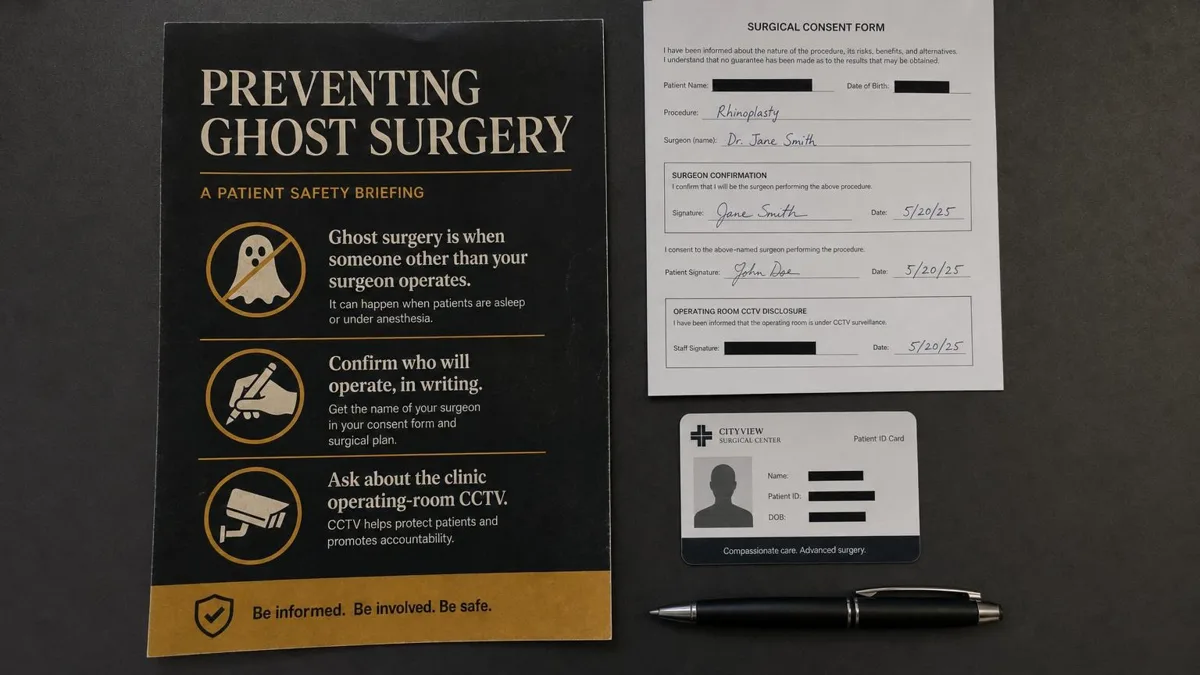
Ghost surgery, when a surgeon other than the one you chose operates without your knowledge, is a serious safety and consent issue, and preventing it is a top concern for any patient. The reassuring part is that it is largely preventable: confirm your surgeon in writing, meet them beforehand, ask about operating-room CCTV, and treat evasiveness as a red flag. Understanding what ghost surgery is, how to prevent it, Korea’s CCTV law, and why verification beats assumption is what protects you.
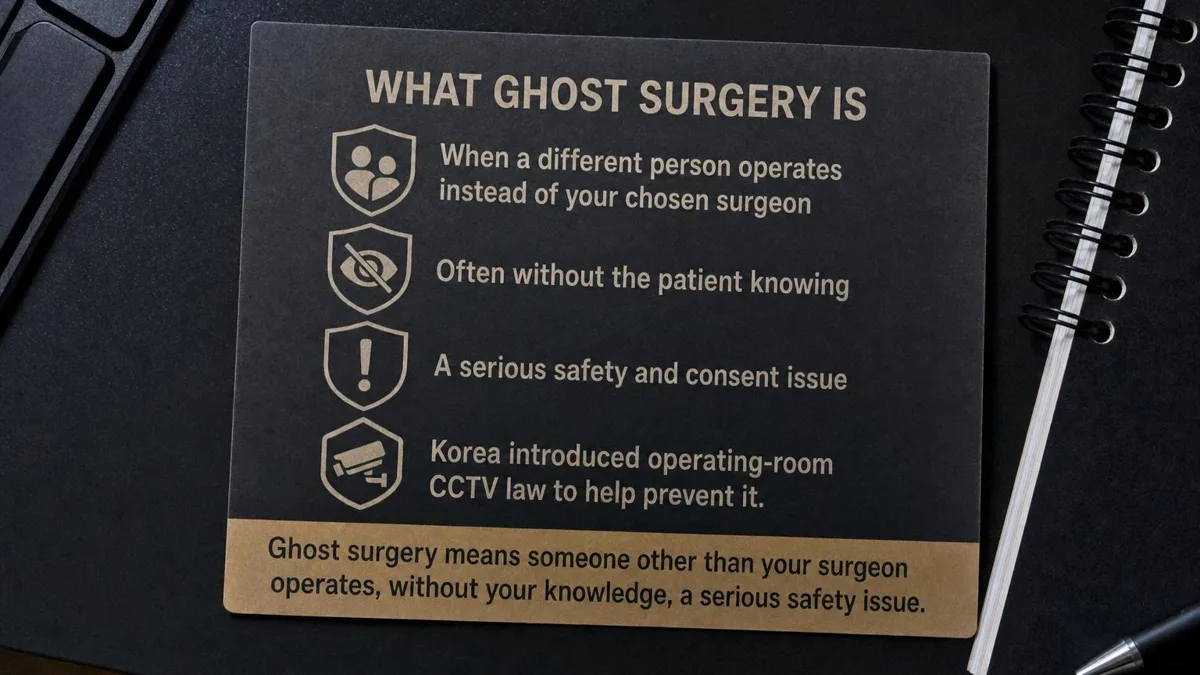
What Ghost Surgery Is
The definition is stark. Ghost surgery is when a different person operates on you instead of the surgeon you chose, often without the patient knowing. Because it happens under anesthesia, the patient has no way to observe it in the moment, which is exactly what makes it possible. It is a serious safety and consent issue, a violation of the trust and agreement between patient and surgeon. Korea introduced an operating-room CCTV law specifically to help prevent it, a measure that reflects how seriously the problem was taken.
So ghost surgery means someone other than your surgeon operates, without your knowledge, a serious safety issue. It matters both because the substitute may be less qualified and because it breaks the fundamental consent you gave to a specific surgeon. Protecting against it is part of the same broader due diligence covered in our guide to verifying a clinic and surgeon, and it is one of the most important things a foreign patient, who cannot easily return, should guard against.
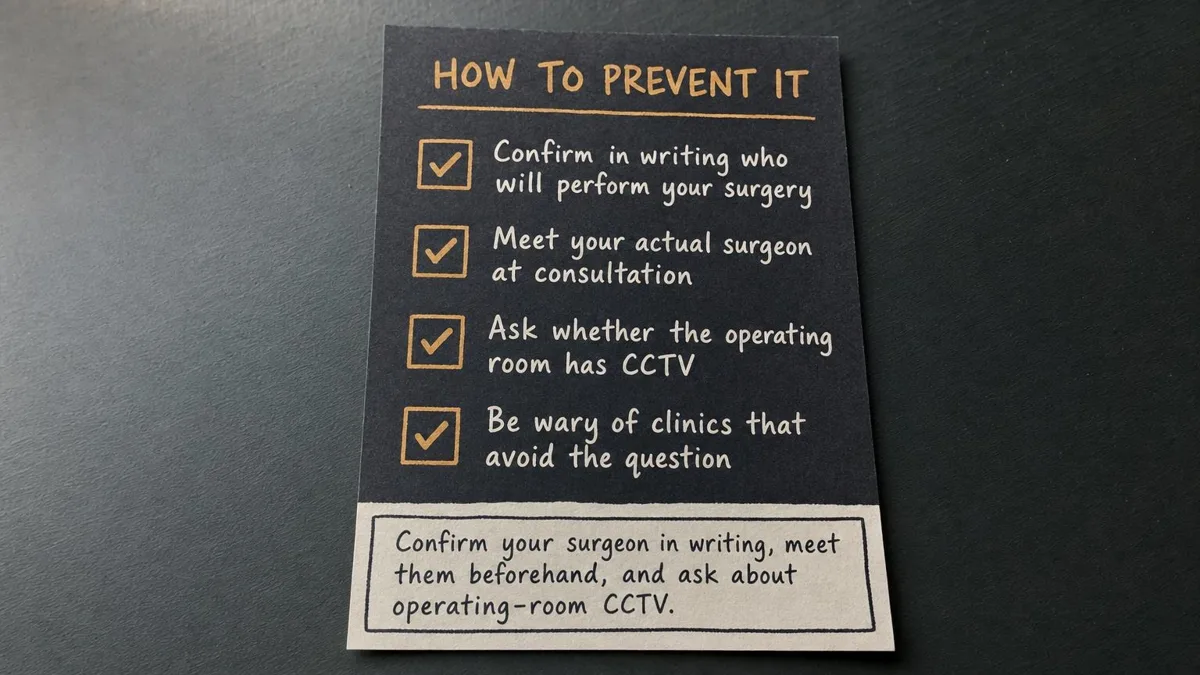
How to Prevent It
Prevention comes down to a few concrete steps taken in advance. Confirm in writing who will perform your surgery, so there is a documented agreement, not just a verbal understanding. Meet your actual surgeon at consultation, so you know who is meant to operate. Ask whether the operating room has CCTV, which both deters substitution and gives a record. And be wary of clinics that avoid or deflect the question, since a transparent clinic has no reason to.
The core guidance is to confirm your surgeon in writing, meet them beforehand, and ask about operating-room CCTV. These steps are simple, reasonable, and entirely within your right to request, and a reputable clinic will accommodate them without hesitation. The same standard of surgeon accountability is reflected in how a clinic presents its doctors, as seen on the clinic’s surgeon and credentials page, where the surgeons who will actually operate are named and identified. Transparency about who operates is the foundation of prevention.
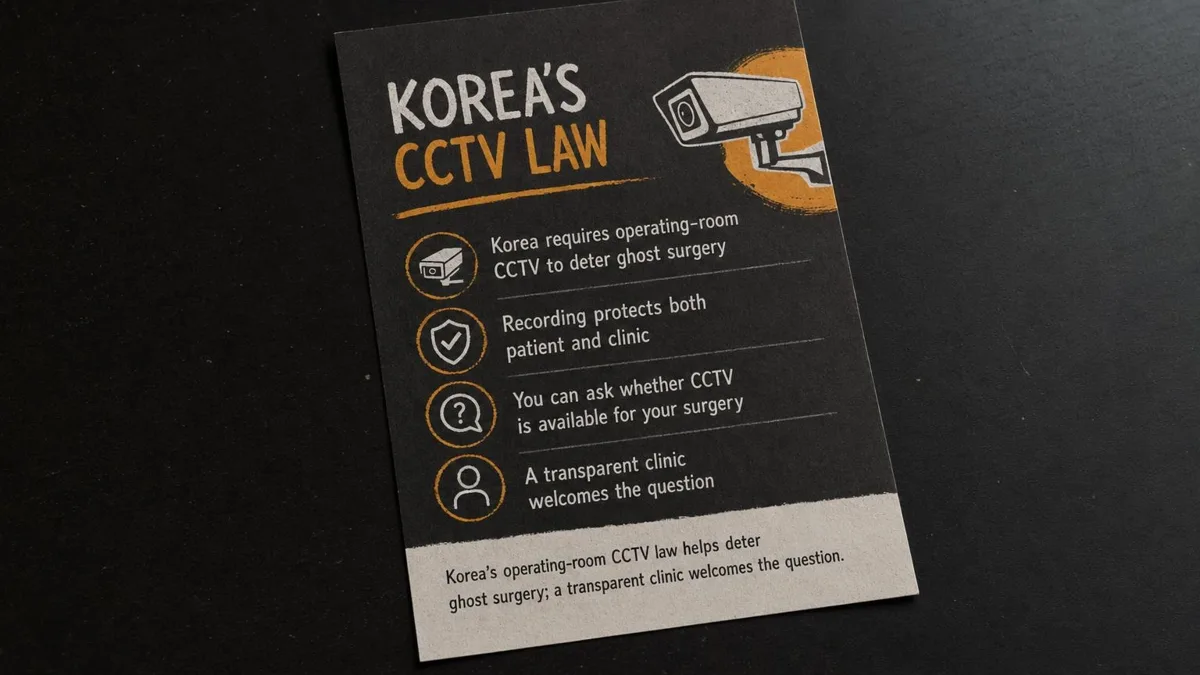
Korea’s CCTV Law
Korea’s response to the problem is worth understanding as a patient. The country requires operating-room CCTV to deter ghost surgery, a legal measure aimed squarely at the issue. Recording protects both the patient and the clinic, since it documents who performed the surgery. You can ask whether CCTV is available for your surgery, and a transparent clinic welcomes the question rather than resisting it. The law exists precisely because the problem was real enough to legislate against.
The reassurance is that Korea’s operating-room CCTV law helps deter ghost surgery, and a transparent clinic welcomes the question. For a foreign patient, this is an added layer of protection beyond your own verification steps. Asking about CCTV is not confrontational; it is a sensible question the law itself encourages, and the way a clinic responds tells you a great deal. A clinic that treats the question as reasonable and answers openly is demonstrating exactly the transparency you want, while one that bristles at it is showing you something too.
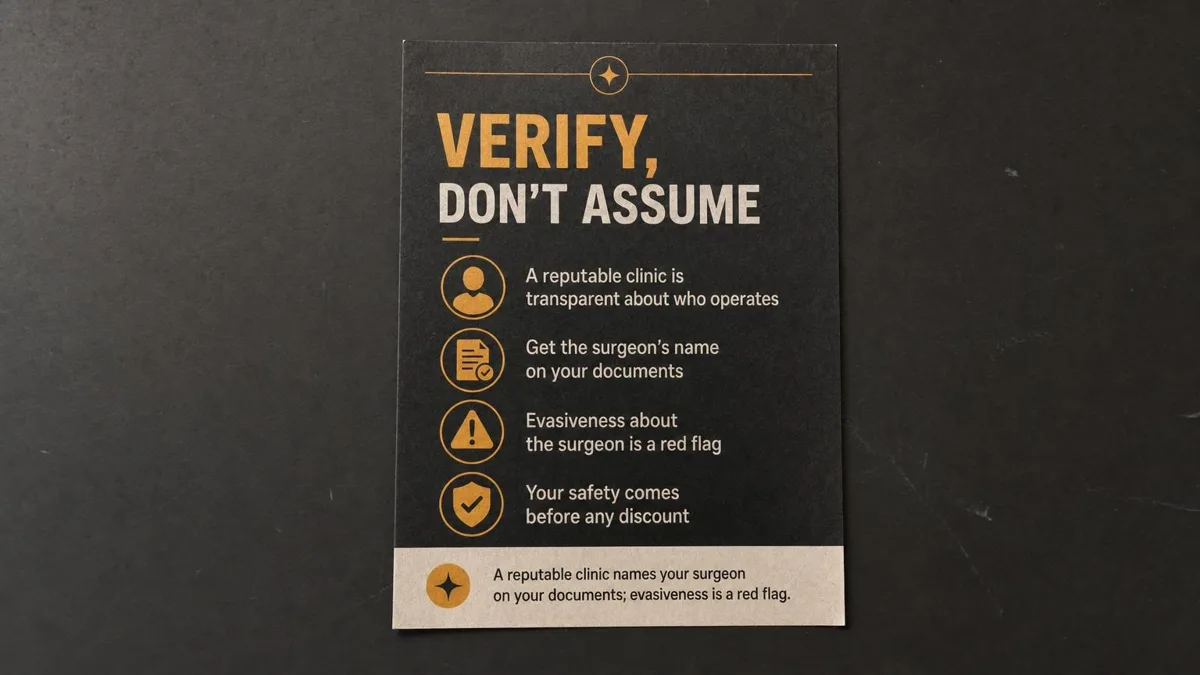
Verify, Don’t Assume
The unifying principle is to verify rather than assume. A reputable clinic is transparent about who operates and has no reason to hide it. Get the surgeon’s name on your documents, so the agreement is concrete. Treat evasiveness about the surgeon as a red flag, because a straightforward answer is the norm for an honest clinic. And remember that your safety comes before any discount, so a cheaper price is never worth uncertainty about who will operate on you.
The honest bottom line is that a reputable clinic names your surgeon on your documents, and evasiveness is a red flag. Ghost surgery thrives on assumption, on patients trusting that the surgeon they met is the one who operated, without confirming it. Replacing assumption with simple verification, in writing, in person, and by asking about CCTV, removes most of the risk. A patient who takes these steps, and a clinic that welcomes them, is the combination that makes ghost surgery a problem you have actively protected yourself against rather than one you merely hoped to avoid.
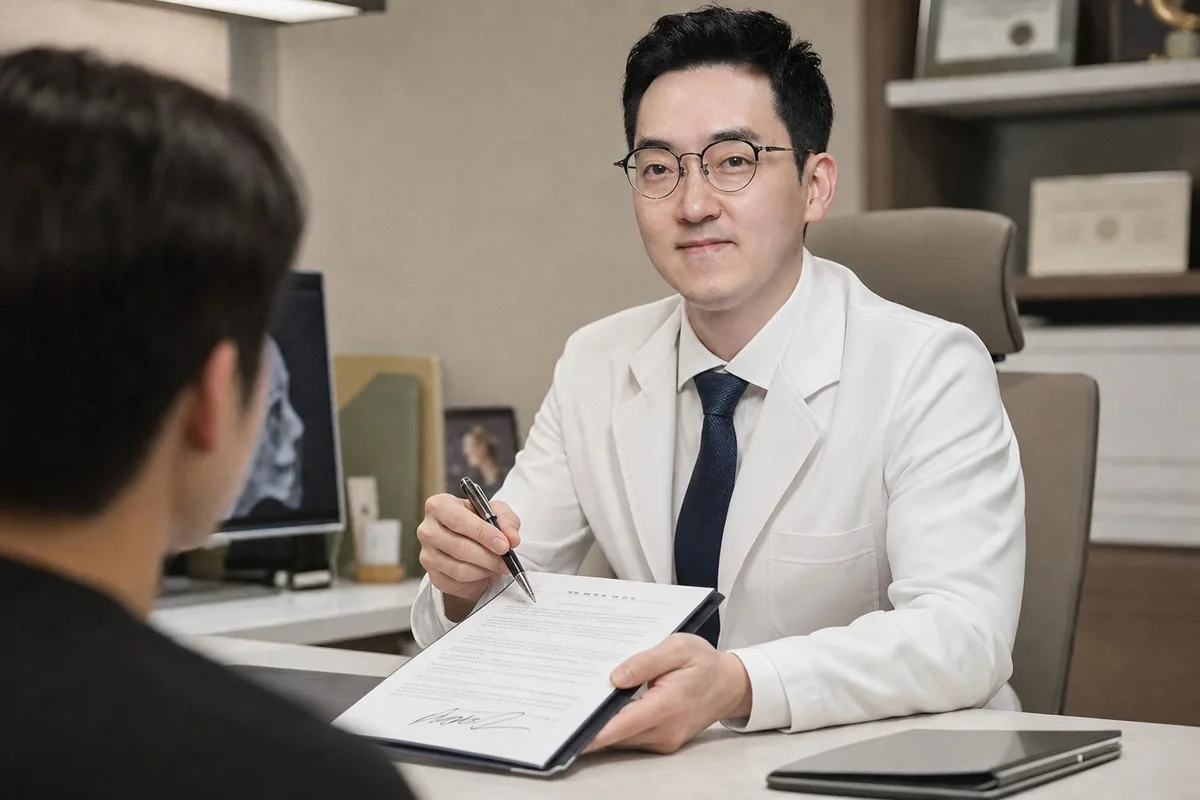
How to Protect Yourself in Practice
Putting it together, protecting yourself is a short, practical checklist rather than a complicated process. Meet the surgeon at consultation and confirm they are the one who will operate. Get that name in writing on your consent and documents. Ask about operating-room CCTV and note how the clinic responds. And choose a clinic whose transparency, not just its price, earns your trust. None of this is confrontational; it is simply the reasonable diligence any patient is entitled to, and it is especially important when you are traveling internationally and cannot easily follow up.
Before committing, five questions protect you from ghost surgery. Have I met the surgeon who is meant to operate, and confirmed it? Is that surgeon’s name on my consent and documents in writing? Does the operating room have CCTV, and did the clinic answer openly when I asked? Was the clinic transparent rather than evasive about who operates? And am I choosing on transparency and safety rather than the lowest price? A clinic that names your surgeon, welcomes the CCTV question, and is transparent throughout is the one to trust. For consultation details, visit Link Plastic Surgery’s official website.
Q. What is ghost surgery?
Ghost surgery is when a surgeon other than the one you chose performs your operation, often without your knowledge, because it happens under anesthesia. It is a serious safety and consent issue: the substitute may be less qualified, and it breaks the agreement you made with a specific surgeon. Korea introduced an operating-room CCTV law specifically to help deter it.
Q. How common is ghost surgery?
It has been a real enough problem in the industry that Korea legislated operating-room CCTV to deter it, which reflects how seriously it was taken. That said, a well-prepared patient can largely prevent it. The point is not to be frightened but to take the simple, reasonable verification steps that remove most of the risk, rather than assuming it cannot happen to you.
Q. How do I make sure my chosen surgeon operates?
Confirm in writing who will perform your surgery, meet your actual surgeon at consultation, and ask whether the operating room has CCTV. Get the surgeon’s name on your consent and documents so the agreement is concrete rather than verbal. A reputable clinic will accommodate all of this without hesitation, since transparency about who operates is normal for an honest clinic.
Q. What is Korea’s operating-room CCTV law?
Korea requires operating-room CCTV to help deter ghost surgery, a legal measure aimed directly at the problem. Recording protects both patient and clinic by documenting who performed the surgery. You can ask whether CCTV is available for your procedure, and a transparent clinic welcomes the question. The law exists because the problem was serious enough to legislate against.
Q. Should I ask about CCTV, or is that rude?
It is not rude; it is a sensible question the law itself encourages, and a transparent clinic welcomes it. How a clinic responds is informative: openness signals the transparency you want, while resistance is a warning. Asking about CCTV is a reasonable part of protecting yourself, especially as a foreign patient, and no reputable clinic should take offense at the question.
Q. What are the red flags for ghost surgery?
Evasiveness about who will operate, reluctance to put the surgeon’s name in writing, deflecting questions about operating-room CCTV, and pressure to decide based on a low price rather than transparency. A reputable clinic answers all of these openly. If a clinic is vague or resistant about who performs your surgery, treat that as a serious warning and reconsider, since your safety outweighs any discount.
Q. Is ghost surgery more of a risk for foreign patients?
Foreign patients can be more vulnerable because they may be less familiar with the clinic, cannot easily verify afterward, and cannot readily return. That makes the preventive steps, confirming the surgeon in writing, meeting them, and asking about CCTV, even more important. The good news is these steps are entirely within your control and remove most of the risk regardless of where you are from.
Q. Can I get the surgeon’s name in writing?
Yes, and you should. Getting your chosen surgeon’s name on your consent and documents turns a verbal understanding into a documented agreement, which is a key protection against substitution. A reputable clinic will do this as a matter of course. If a clinic resists putting the operating surgeon’s name in writing, treat that reluctance as a significant red flag.
Q. Does a good clinic mind these questions?
No. A transparent, reputable clinic expects and welcomes questions about who operates and about CCTV, because it has nothing to hide and understands the concern. The way a clinic responds is itself a test: openness confirms trustworthiness, while evasiveness reveals a problem. Choosing a clinic partly on how transparently it answers these questions is sensible, not excessive.
Q. How do I protect myself as an international patient?
Meet the surgeon at consultation and confirm they will operate, get their name in writing on your documents, ask about operating-room CCTV and note the response, and choose a clinic on transparency rather than the lowest price. These simple steps remove most of the risk. For consultation details, visit Link Plastic Surgery’s official website.