Why Your Spring Skincare Routine Starts with a Reset
If you have been layering on rich creams and heavy serums all winter long, your skin is practically begging for a change. As temperatures climb and humidity levels shift, the thick, occlusive products that kept your moisture barrier intact during the cold months can start working against you — clogging pores, triggering breakouts, and leaving a greasy film that feels anything but fresh. That is exactly why building a proper spring skincare routine matters more than most people realize.

But here is the thing most skincare articles get wrong: you should not overhaul your entire routine overnight. A successful winter-to-spring skincare transition is about gradual, intentional swaps that let your skin adapt without triggering irritation or rebound dryness. Think of it like easing into a new workout program rather than jumping straight into the deep end.
This guide gives you a structured, week-by-week plan to transition your skincare from winter to spring. It covers AM and PM routines, skin-type-specific advice, and the ingredient swaps that actually matter. Whether you are dealing with post-winter dullness, a compromised skin barrier, or the first oily patches of the season, you will find exactly what you need below.

How Winter Affects Your Skin (and Signs of Winter Damage)
Before you start switching products, it helps to understand what winter actually did to your skin. Cold air, indoor heating, and low humidity create the perfect storm for moisture loss. Over three to four months of these conditions, most people experience some degree of barrier damage — even if they maintained a solid winter routine.
Winter Damage Assessment Checklist
Take a close look at your skin and check for these common signs of winter damage:
- Persistent tightness or flakiness even after moisturizing, which signals a weakened moisture barrier
- Rough, uneven texture caused by a buildup of dead skin cells that could not shed properly in dry conditions
- Dull, sallow complexion from reduced cell turnover and decreased blood circulation in cold weather
- Increased sensitivity or redness that was not present before winter, indicating barrier compromise
- Tiny bumps or clogged pores from months of heavier products sitting on the skin
- Cracked or peeling lips and dry patches around the nose where skin is thinnest and most exposed
If you checked three or more items on that list, your skin barrier likely needs some repair before you dive into active exfoliation or product swaps. Start with the barrier repair steps in Week 1 of the transition plan below, and be especially gentle during the first two weeks.
The 4-Week Spring Skincare Transition Plan
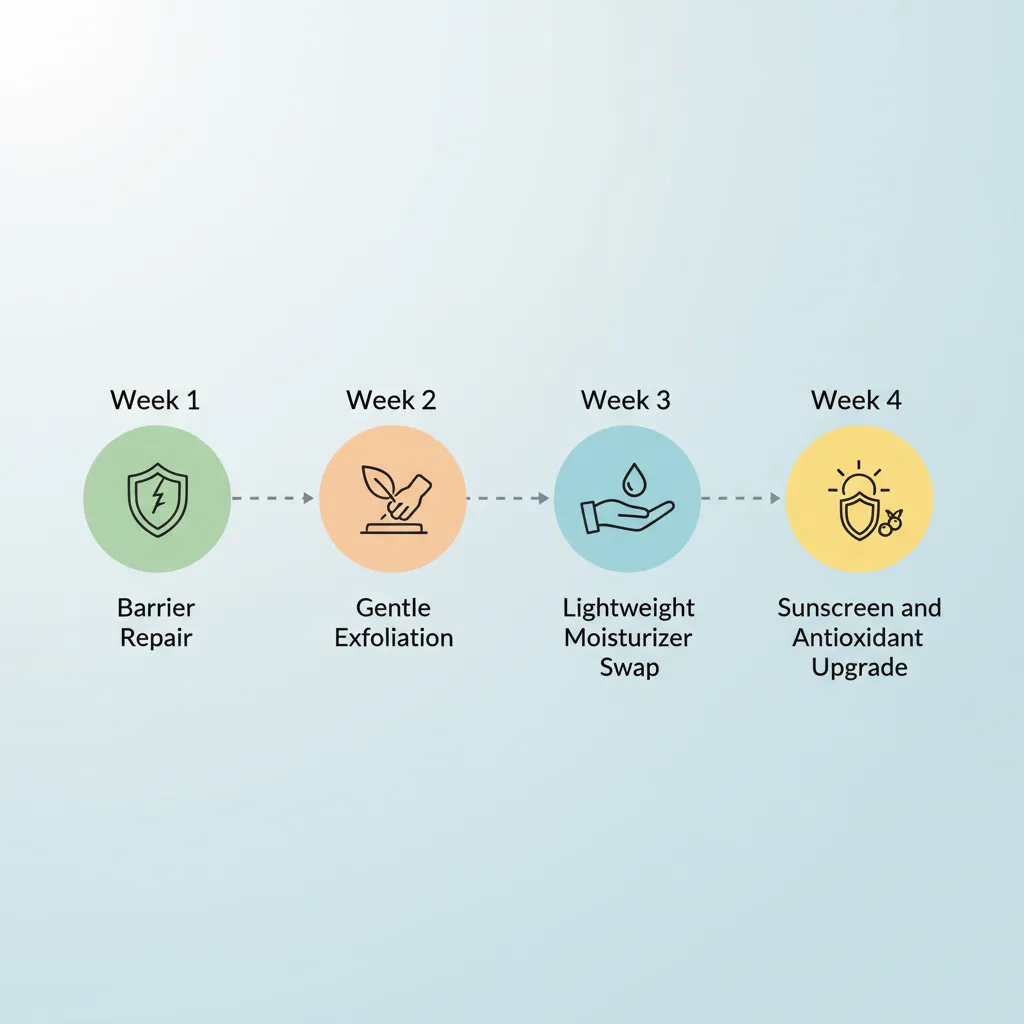
Rather than changing everything at once, this week-by-week calendar gives your skin time to adjust. The key principle is simple: introduce only one new product or change per week so you can identify what works and what does not.
Week 1: Repair and Assess Your Skin Barrier
Focus entirely on spring skin barrier repair. Keep using your winter moisturizer, but add a hydrating serum with hyaluronic acid or ceramides if you are not already using one. This is also the time to check each product’s Period After Opening (PAO) symbol — the small open-jar icon on the label — and toss anything past its recommended use-by date, which can range from 6 to 24 months depending on the product type. Cleanse gently, hydrate generously, and resist the urge to exfoliate just yet.

Week 2: Introduce Gentle Exfoliation After Winter
Once your barrier feels stable and there is no tightness or flaking, introduce a mild exfoliant two times per week. A low-concentration lactic acid (5 to 10 percent) or a PHA (polyhydroxy acid) is ideal for exfoliation after winter because these work on the skin surface without penetrating too deeply. Skip physical scrubs for now — rough or irregularly shaped particles can irritate skin and potentially compromise your already weakened barrier.
Week 3: Swap to a Lightweight Moisturizer for Spring
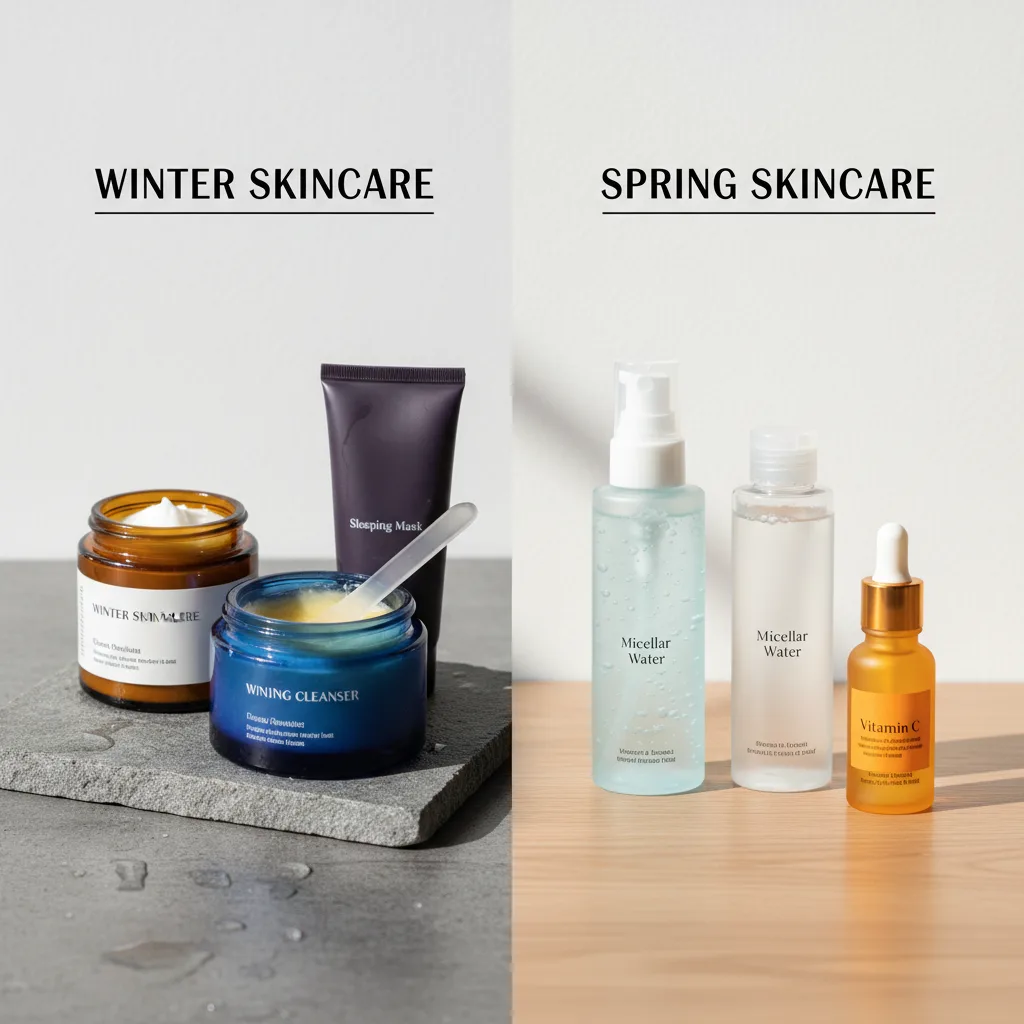
Now your skin is ready for the signature spring swap. Replace your heavy cream with a lightweight moisturizer for spring — something gel-based or a light lotion with hyaluronic acid, squalane, or niacinamide. At the same time, switch your creamy winter cleanser for a gentle gel or micellar formula that removes excess oil without stripping moisture. Keep your heavier products on hand for colder days, because spring weather can be unpredictable.
Week 4: Upgrade Your Spring Sunscreen Routine and Add Antioxidants
With longer days and stronger UV rays, your spring sunscreen routine needs an upgrade. Move to a broad-spectrum SPF 30 or higher that you actually enjoy wearing daily. This is also the perfect week to introduce a vitamin C serum in the morning. Vitamin C pairs with sunscreen to provide superior protection against UV damage and helps brighten any winter dullness that remains.
Your Complete Spring AM Skincare Routine
Once you have completed the four-week transition, here is what a solid spring morning routine looks like, in the correct order of application:
- Gentle gel cleanser to remove overnight oil and prep the skin
- Vitamin C serum (15 to 20 percent L-ascorbic acid) applied to slightly damp skin for better absorption
- Lightweight hydrating serum with hyaluronic acid or niacinamide for a moisture boost without heaviness
- Light gel-cream or lotion moisturizer to seal in hydration without the greasy feel
- Broad-spectrum SPF 30 or higher as the final step, applied generously and reapplied every two hours if outdoors
The key difference from your winter AM routine is the weight of each layer. Everything should feel lighter, absorb faster, and sit comfortably under makeup or on bare skin without pilling or sliding.
Your Complete Spring PM Skincare Routine
While your morning routine focuses on protection, your evening routine is where the real repair and renewal happens. Here is how to structure your spring skincare routine at night:
- Oil cleanser or micellar water as a first cleanse to dissolve sunscreen, makeup, and the day’s grime
- Water-based gel cleanser as a second cleanse for a truly clean canvas
- Exfoliating treatment (two to three times per week) with AHA, BHA, or PHA depending on your skin’s needs
- Hydrating toner or essence to replenish moisture after cleansing
- Treatment serum targeted to your specific concern, such as retinol for texture or niacinamide for pores
- Night moisturizer slightly richer than your AM version but still lighter than your winter night cream
One important note about ingredient interactions: if you are using a retinol at night, do not layer it with your AHA or BHA exfoliant on the same evening. Alternate nights to prevent over-exfoliation, which is one of the most common spring skincare mistakes.
Spring Skincare Routine by Skin Type
Generic advice only gets you so far. Here is how to customize your spring skincare routine based on your specific skin type, so you get the best possible results from the seasonal transition.
Oily Skin in Spring
Warmer weather means your sebaceous glands are about to kick into higher gear. Switch to an oil-free gel moisturizer and look for products with niacinamide, which can help regulate sebum production without drying you out. Use a BHA (salicylic acid) exfoliant two to three times weekly to keep pores clear. Whatever you do, do not skip moisturizer entirely — dehydrated oily skin actually produces even more oil as it tries to compensate for an unbalanced barrier.
Spring Skincare for Dry Skin
Spring skincare for dry skin requires a careful balance. You want to lighten up, but not so much that your skin feels parched again. Opt for a lightweight lotion moisturizer rather than a gel, and keep a hyaluronic acid serum in your lineup. Consider layering a few drops of squalane oil under your moisturizer on days when the air is still dry. Your exfoliation should stay gentle — lactic acid or PHA rather than glycolic acid above 10 percent.
Combination Skin in Spring
This is actually the easiest skin type to manage in spring. Use a gel-cream moisturizer all over and add a lightweight oil-free serum to your T-zone if it gets shiny by midday. Multi-masking works well here: apply a clay mask on the T-zone and a hydrating mask on the cheeks once a week to balance both zones without overcomplicating your daily routine.
Sensitive Skin in Spring
Spring brings a double challenge for sensitive skin: product transitions and seasonal allergens. As a result, make your product swaps even more gradually, waiting a full two weeks between each new introduction instead of one. Choose fragrance-free formulas and avoid products with long ingredient lists. PHA exfoliants are your safest option because their larger molecular size means they do not penetrate as deeply. If you notice increased redness or irritation, consider adding a centella asiatica (cica) product to calm inflammation.
Key Ingredient Swaps for Your Spring Skincare Routine
Knowing which ingredients to rotate in and out with the seasons makes the transition much smoother. Here is a comprehensive breakdown of what to swap:
A word of caution about ingredient interactions when switching products for warmer weather: if you are introducing vitamin C in the morning and an AHA exfoliant at night for the first time, start with one for a full week before adding the other. Using both simultaneously from day one can overwhelm skin that has been on a simpler winter routine, leading to redness and peeling.
Spring Sunscreen Guide: Choosing the Right SPF
Let us be honest: if your winter sunscreen was a thick, white-cast formula that you applied reluctantly, spring is the time to find one you will actually use every day. UV intensity increases significantly from March through May, and longer daylight hours mean more cumulative exposure — even on overcast days.
Here is what to look for in your spring sunscreen routine:
- Broad-spectrum SPF 30 minimum, though SPF 50 is preferable if you spend time outdoors
- Lightweight, fast-absorbing texture so it layers well under makeup or sits comfortably on bare skin
- No white cast, especially important for deeper skin tones where heavy mineral sunscreens can look ashy
- Water-resistant formula if you exercise outdoors or sweat during warmer days
Chemical sunscreens (with avobenzone, homosalate, or newer filters like bemotrizinol, which is widely available in Europe, Australia, and Asia though not yet approved in the U.S.) tend to feel lighter and more cosmetically elegant than mineral options. However, if you have sensitive or reactive skin, a mineral sunscreen with zinc oxide remains the gentler choice. Many modern mineral formulas have improved dramatically in both texture and finish.
Exfoliation After Winter: How to Safely Resurface Your Skin
After months of reduced cell turnover, dead skin has built up more than usual. Proper exfoliation after winter reveals the fresh, radiant skin underneath — but overdoing it is the fastest way to undo your progress.
For best results, start with chemical exfoliants rather than physical scrubs. Chemical options dissolve the bonds between dead cells more uniformly, while physical scrubs create uneven pressure and can cause irritation if your barrier is already compromised.
A sensible exfoliation schedule for spring looks like this:
- Weeks 1 to 2: Exfoliate once per week with a gentle lactic acid (5 to 10 percent) or PHA toner
- Weeks 3 to 4: Increase to twice per week if your skin tolerates it well
- Month 2 onward: You can move to two to three times per week, or introduce a slightly stronger product like glycolic acid (up to 10 percent) if your skin can handle it
Always exfoliate in the evening and follow with a hydrating serum and moisturizer. Never combine your exfoliant with retinol on the same night, and always wear sunscreen the following day, as freshly exfoliated skin is more sensitive to UV damage.
Spring Skincare Mistakes to Avoid
Even well-intentioned skincare enthusiasts make these common errors during the seasonal transition. Knowing what to watch out for can save you weeks of irritation and breakouts.
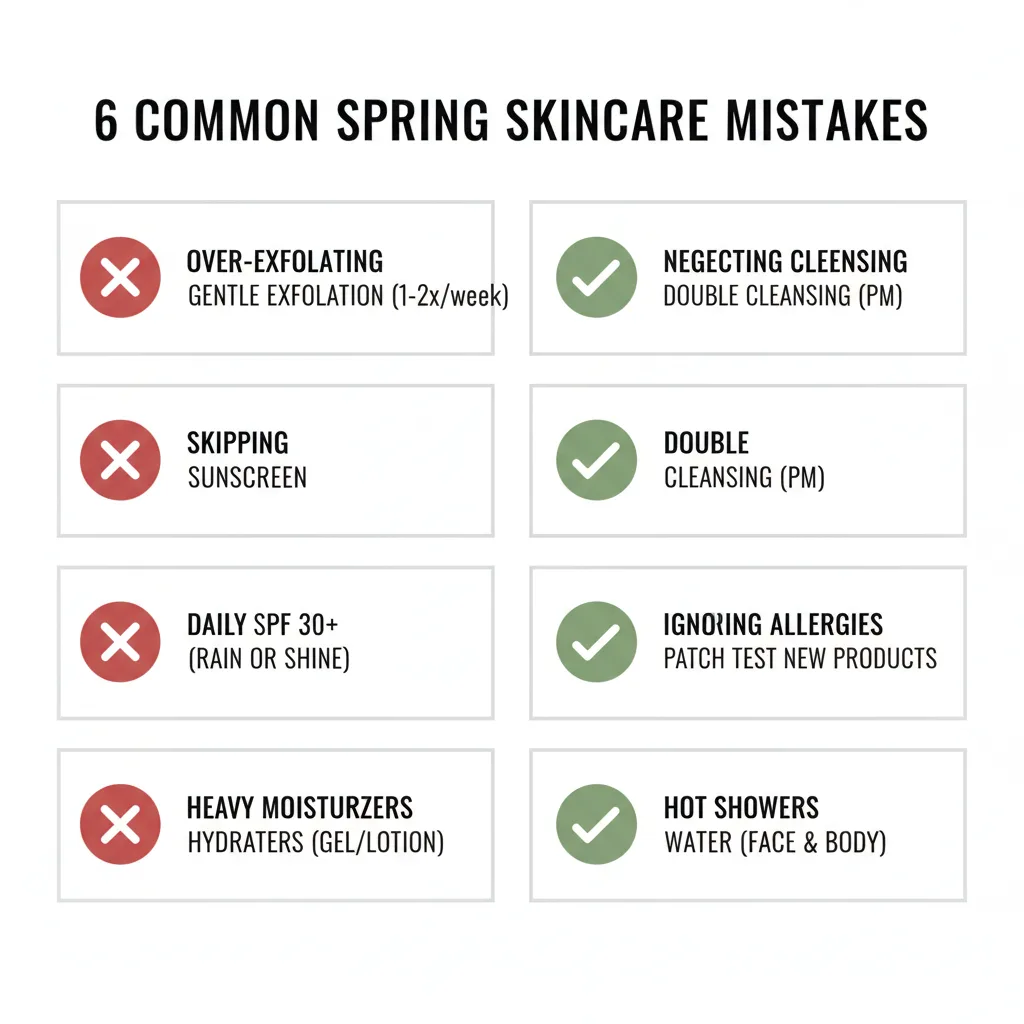
- Switching too many products at once. Introducing more than one new product per week makes it impossible to identify what is causing a reaction. Be patient and methodical.
- Over-exfoliating to “fix” winter dullness. Your skin cannot shed three months of buildup in one aggressive session. Gradual exfoliation over several weeks is safer and more effective.
- Dropping moisturizer entirely because skin feels oily. Warmer weather triggers more sebum production, but skipping moisturizer signals your skin to produce even more oil. Switch to a lighter formula instead of eliminating the step.
- Forgetting to update your SPF. The SPF mixed into your winter moisturizer is not enough for spring. You need a dedicated sunscreen applied as the last step of your skincare routine.
- Ignoring new sensitivities. Seasonal allergies can make skin more reactive in spring. If a product that worked fine in winter suddenly causes stinging or redness, pollen and environmental allergens could be the culprit. Simplify your routine until the reaction calms.
- Neglecting your neck and chest. These areas get more sun exposure as you switch from turtlenecks to lighter clothing. Extend every step of your routine — especially sunscreen — below your jawline.
Body and Lip Care: The Forgotten Spring Skincare Transition
Most spring skincare guides focus exclusively on the face, but your body and lips need a seasonal update too. Here are the essential adjustments to make.
Body Care
Swap your thick body butter for a lighter body lotion. Exfoliate your body once a week with a gentle scrub or a body wash containing salicylic acid to clear any rough patches or keratosis pilaris (those small bumps on the backs of arms). Additionally, apply sunscreen to any exposed skin, not just your face. Your hands, forearms, and the back of your neck are particularly vulnerable to spring UV exposure.
Lip Care
Winter probably left your lips dry and chapped. Gently exfoliate them with a soft cloth or a lip scrub, then switch from a heavy balm to a hydrating lip product with SPF 15 or higher. Look for ingredients like shea butter, vitamin E, and hyaluronic acid. Avoid anything with menthol or camphor — these create a tingling sensation that feels soothing but actually dry out lips further over time.
Diet and Lifestyle Tips for Healthy Spring Skin
What you put into your body matters just as much as what you put on your skin. A few targeted adjustments can amplify the results of your topical spring skincare routine.
- Stay well hydrated. As temperatures rise and you become more active, your body loses more water through sweat. Keep a water bottle handy and drink consistently throughout the day, adjusting your intake based on your activity level and climate.
- Eat more antioxidant-rich foods. Berries, leafy greens, sweet potatoes, and tomatoes provide vitamins A, C, and E that support skin repair from the inside out.
- Add omega-3 fatty acids. Salmon, walnuts, chia seeds, and flaxseed support the skin’s lipid barrier and help reduce inflammation that can flare up during seasonal transitions.
- Manage seasonal allergies proactively. Histamine responses do not just cause sneezing — they can trigger skin inflammation, puffiness, and breakouts. If you are allergy-prone, start antihistamines early in the season and wash your face when you come indoors to remove pollen.
- Prioritize sleep. Your skin does its most intensive repair work during deep sleep. Aim for seven to nine hours, and consider sleeping on a silk pillowcase to reduce friction and moisture loss.
Q. When exactly should I start transitioning my skincare routine for spring?
Start about two to three weeks before consistent warm weather arrives in your area. In most temperate climates, late February to mid-March is ideal. Watch your local forecast rather than sticking to a specific calendar date, because your skin responds to actual environmental conditions, not the calendar.
Q. Can I keep using my winter products on cold spring days?
Absolutely. Spring weather is unpredictable, and there is nothing wrong with pulling out your richer moisturizer on a particularly cold or dry day. A flexible approach is better than rigidly sticking to a “spring only” routine when the weather does not cooperate.
Q. Do I need separate routines for humid and dry spring weather?
Not entirely separate routines, but you should adjust your product textures. If you live in a humid climate, lean harder toward gel-based products and oil-free formulas. If your spring is dry and windy, keep a slightly richer moisturizer and use your hyaluronic acid serum on damp skin to avoid it pulling moisture from deeper layers. The core routine structure stays the same — it is the product weights that shift.
Q. How do I know if my skin barrier is repaired enough to start exfoliating?
Your skin should feel comfortable without moisturizer for at least a few minutes after cleansing. It should not sting when you apply products, and there should be no visible flaking or persistent redness. If you can check all three boxes, your barrier is ready for gentle exfoliation.
Q. Is a vitamin C serum really necessary in a spring skincare routine?
It is not mandatory, but it is one of the most impactful additions you can make. Vitamin C is one of the most well-studied antioxidants for skin — it boosts your sunscreen’s protective ability, helps fade hyperpigmentation from winter, and gives your complexion a visible brightness boost. If you are going to add one new active this spring, make it vitamin C.